There are fictional deaths that function like narrative punctuation marks. Sad, sure, but ultimately tidy. They move the story forward, cue the next act, and politely step aside for whatever explosion, prophecy, or training montage comes next.
And then there are the other ones.
The fictional deaths that don’t just happen in a story but happen to us.
These are the moments that bypass plot logic entirely and go straight for the emotional control panel. They’re the fictional deaths that make you stare at the credits in silence, suddenly aware of your own breathing. The ones you insist you’re “over,” right up until a score swells, a line gets quoted online, or a harmless rewatch ambushes you at the worst possible time. Years go by. New fandoms rise. Streaming queues overflow. And somehow, these fictional deaths remain perfectly preserved, waiting.
That’s because this isn’t about who died to advance the narrative or raise the stakes. It’s not about body counts, surprise twists, or whether a fictional death was “earned” in a screenwriting sense. This is about emotional damage. The kind inflicted when fictional deaths hit too close to something real. When they brush against childhood, grief, love, regret, or the slow passage of time and refuse to let go.
This ranking is for the fictional deaths that rewired us a little. The ones that taught us stories could hurt, and that sometimes we’d come back anyway.
Subscribe to Fictionphile
No spam. We never sell your info.
Ellie’s Death in Up: The Fictional Death That Redefined Animated Grief
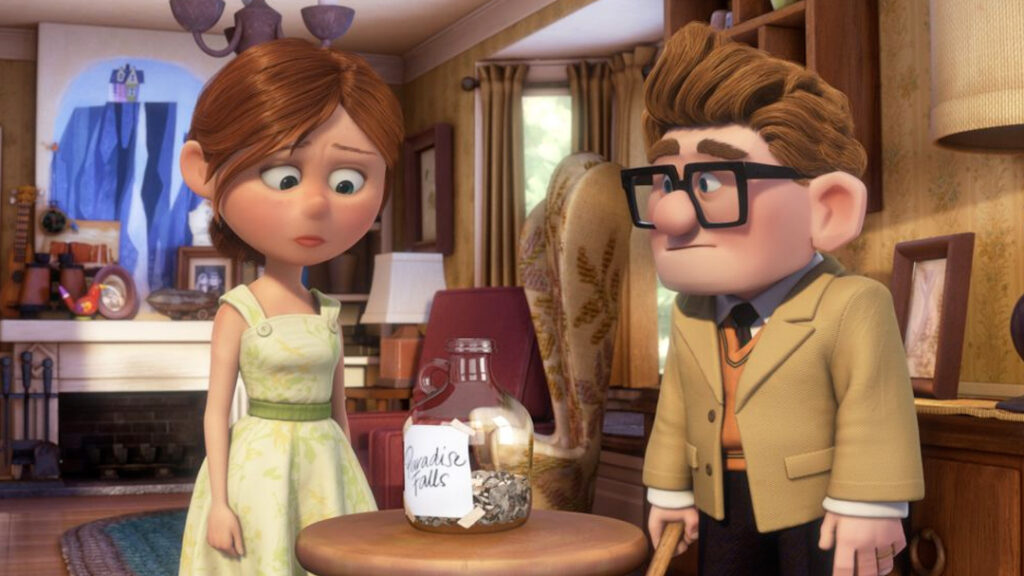
Pixar dismantled an entire audience in under ten minutes, and in doing so delivered one of the most quietly devastating fictional deaths in animation. Ellie’s death devastates precisely because it arrives the same way real loss does: quietly, incrementally, and without narrative permission.
What makes the montage so emotionally lethal is its restraint. It doesn’t underline its sadness or pause to make sure the audience is paying attention. It trusts us to recognize the meaning in small things: a picnic cut short, a nursery that never fills, two chairs growing older together. Time passes not as a dramatic force, but as a gentle erosion. The film never tells us to cry. It just shows us a life honestly lived, and lets the weight settle on its own.
In doing so, Up quietly redefined what animated storytelling could hold. This wasn’t grief softened for children or exaggerated for effect. It was adult grief. The kind shaped by years, compromise, and love that doesn’t fail but still ends. For many viewers, Ellie’s death wasn’t just heartbreaking. It was a revelation. Animation, it turned out, could carry sorrow without cushioning it, could sit with loss without apology, and could trust its audience to feel the full gravity of a goodbye whispered rather than shouted.
Mufasa’s Death in The Lion King: A Generation’s First Traumatic Fictional Death
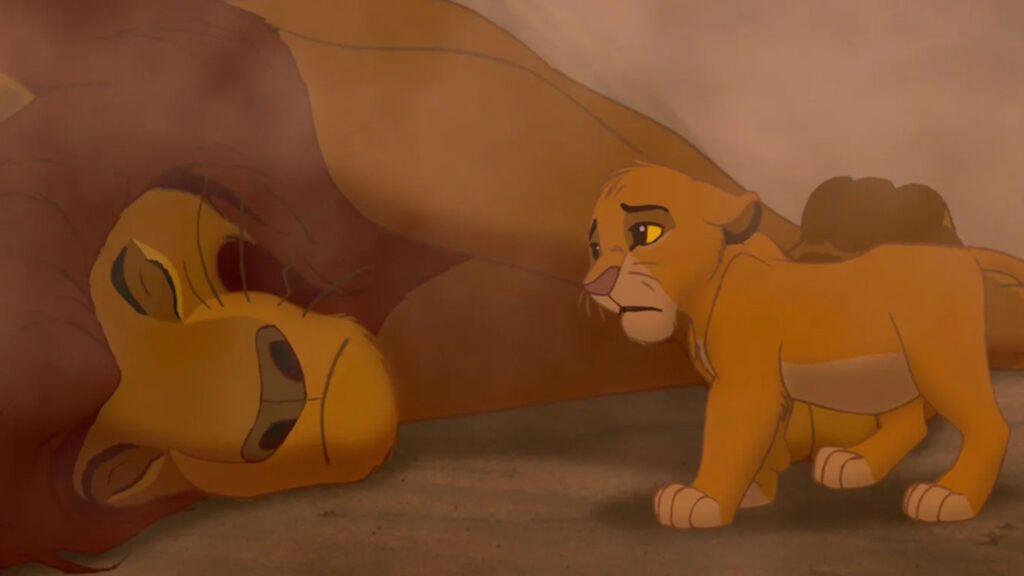
This wasn’t just a fictional death. It was an emotional rite of passage, delivered to an audience far younger than anyone realized at the time. Mufasa’s fall didn’t ease viewers into the idea of loss or soften its edges. It dropped them straight into it. One moment there is safety, guidance, and a voice that promises everything will be okay. The next, that voice is gone, and nothing in the world rushes in to replace it.
What makes the scene endure is not the spectacle of the fall, but what comes after. Simba’s small body nudging his father, his voice cracking as he begs him to wake up, is almost unbearably intimate. There’s no score swelling to reassure us, no quick cut away. The film allows the silence to stretch, to sit heavy in the air. That quiet is doing all the work. It mirrors the void left behind when someone essential disappears and the world, cruelly, keeps going.
For many viewers, this was the first time a story refused to undo death. Mufasa does not return in time. There is no last-minute rescue, no comforting lie. Betrayal has consequences. Loss is permanent. And guilt, especially a child’s guilt, can take root fast and deep. Long before audiences had the words to describe grief, shock, or trauma, this scene gave them the sensation of it. It taught a generation that stories could hurt in a way that felt real, and that sometimes, the most powerful lesson a film can offer is the quiet understanding that some goodbyes don’t come with closure.
Rue’s Death in The Hunger Games: The Death That Exposed the Cost of Spectacle
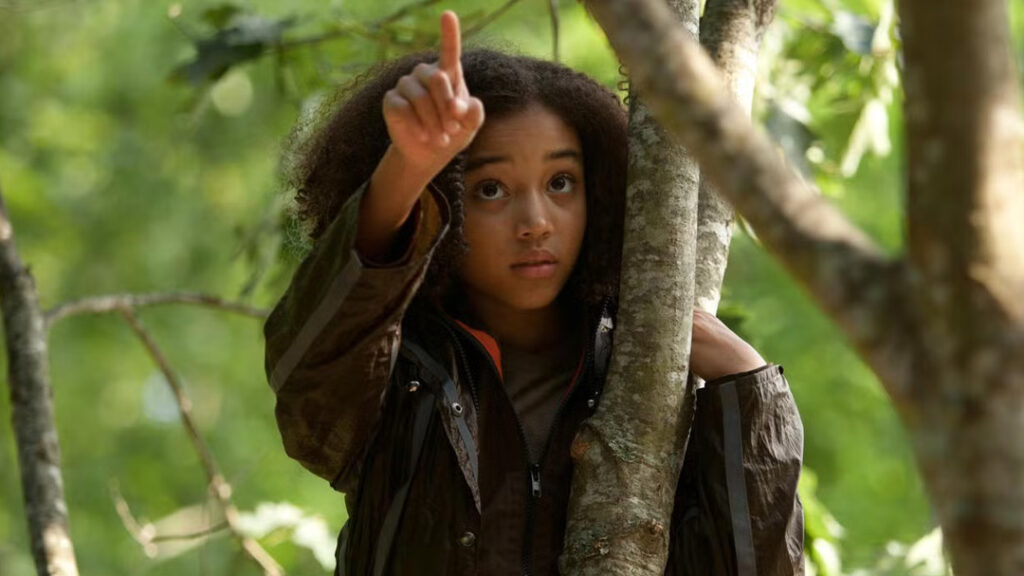
Rue’s death lands with devastating clarity because it strips the story of any remaining illusion. Up until that moment, The Hunger Games flirts with spectacle. The arena is dangerous, yes, but it is also framed through strategy, survival, and the uneasy thrill of competition. Rue shatters that framing simply by existing. She is small, gentle, and observant, a child whose strengths are born from care rather than aggression. From the start, she feels out of place in a system that rewards cruelty, and that imbalance makes her fate feel inevitable in the most unbearable way.
When Rue dies, the violence is no longer abstract. It isn’t about winning or losing. It’s about a child who trusted someone and paid for it. Katniss’s response is what elevates the moment from tragedy to indictment. The flowers she places over Rue’s body are not sentimental. They are deliberate. In a space designed to erase humanity, Katniss chooses to preserve it, turning an act of mourning into an act of resistance. The gesture reframes the Games entirely, exposing them for what they are: not entertainment, but ritualized cruelty masquerading as order.
This is the instant the franchise’s moral spine locks into place. The story stops asking the audience to be impressed by survival tactics and starts demanding discomfort. This fictional death forces a reckoning, both for the characters and the viewers, with the cost of a system that feeds on the innocent. That’s why it still hurts to watch. Not because it’s shocking, but because it’s clear. Clear about who suffers, clear about who benefits, and clear about the fact that no amount of spectacle can justify the loss of something so small, so kind, and so utterly irreplaceable.
Boromir’s Death in The Lord of the Rings: A Fictional Death Built on Redemption, Not Shock
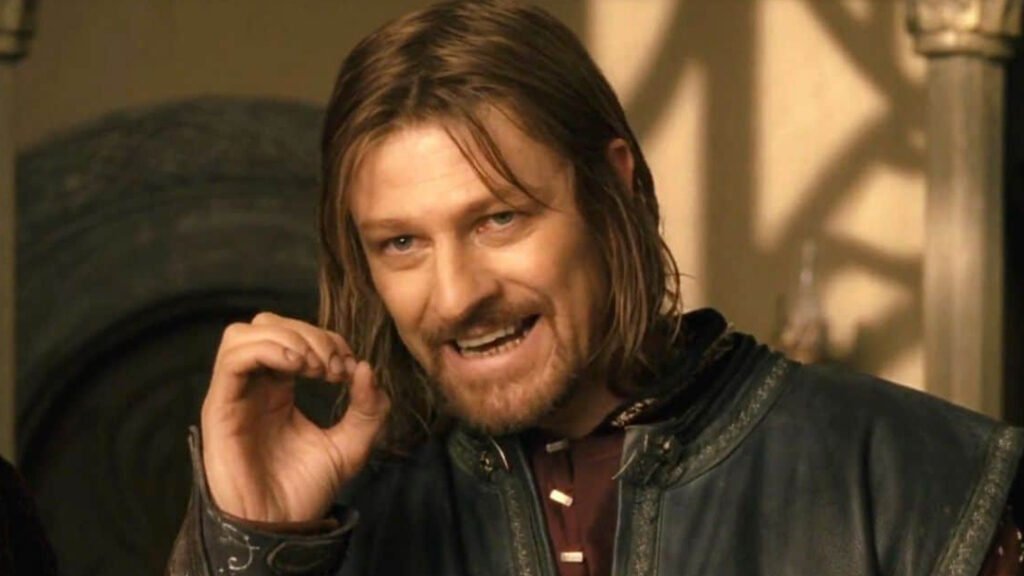
Boromir’s death succeeds because it refuses to flatten him into a cautionary tale. He is not a villain undone by greed, nor a saint immune to temptation. He is a man shaped by duty, fear, and a desperate love for a homeland already slipping away. His failure with the Ring is not framed as moral rot but as exhaustion, the understandable breaking point of someone asked to carry too much for too long.
That context is what makes his final stand so devastating. Arrow after arrow finds its mark, yet Boromir never stops fighting. The image is brutal but purposeful. This is not a flashy last stand meant to impress, but a stubborn refusal to surrender, a man choosing, again and again, to do the right thing even as his body gives out. In reclaiming his honor through action, Boromir reframes his earlier mistake as human weakness rather than corruption.
Redemption does come, but it arrives without mercy. There is no miracle, no survival granted as a reward for growth. The cost is absolute. When Aragorn finally reaches him, the scene quiets, stripping away spectacle in favor of intimacy. Their exchange is spare, respectful, and devastating in its restraint. Boromir’s admission, Aragorn’s forgiveness, and the simple acknowledgment of what might have been combine into a farewell that lingers long after the battle fades. In a genre known for grand gestures, Boromir’s death endures because of its dignity, its honesty, and its refusal to offer comfort where none is owed.
Charlie Pace’s Death in Lost: The Death Defined by Choice
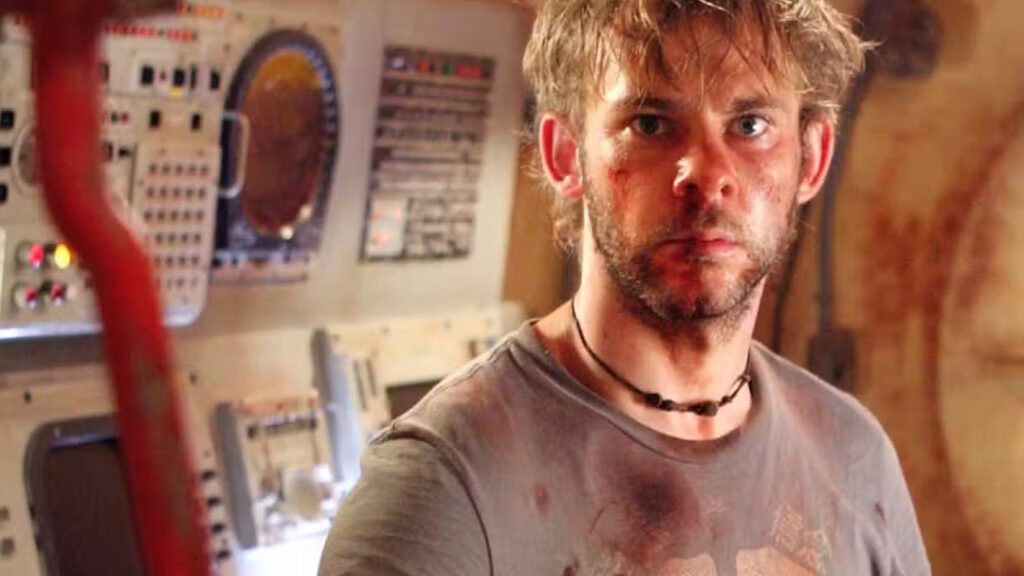
Charlie’s death stands out amongst fictional deaths. It didn’t rely on chaos or spectacle. It relied on choice, and that’s what makes it unbearable. In a series defined by mystery, coincidence, and the sense that unseen forces were always pulling the strings, Charlie’s final moments stand out for their clarity. There is no confusion about what’s happening or what it will cost. He understands the outcome, accepts it, and moves forward anyway.
The power of the scene lies in its stillness. The calm resolve on Charlie’s face, the deliberate way he writes the warning on his hand, the quiet finality of the door closing. Each action is intentional, almost ritualistic. “Not Penny’s Boat” isn’t just a twist revelation; it’s a farewell compressed into four words. A message meant to save others even as he lets himself go.
What makes Charlie’s ending so devastating is how it redefines heroism within the world of Lost. This is not fate claiming another victim. This is a man choosing meaning over survival. In a narrative obsessed with destiny and second chances, Charlie’s death feels tragically grounded. He doesn’t wait for the island to decide for him. He decides. That agency, exercised at the very moment he loses everything, is why the moment still lingers. It wasn’t random. It wasn’t inevitable. It was chosen, and that makes the loss feel all the heavier.
Logan’s Death in Logan: When Fictional Deaths Finally Stayed Final
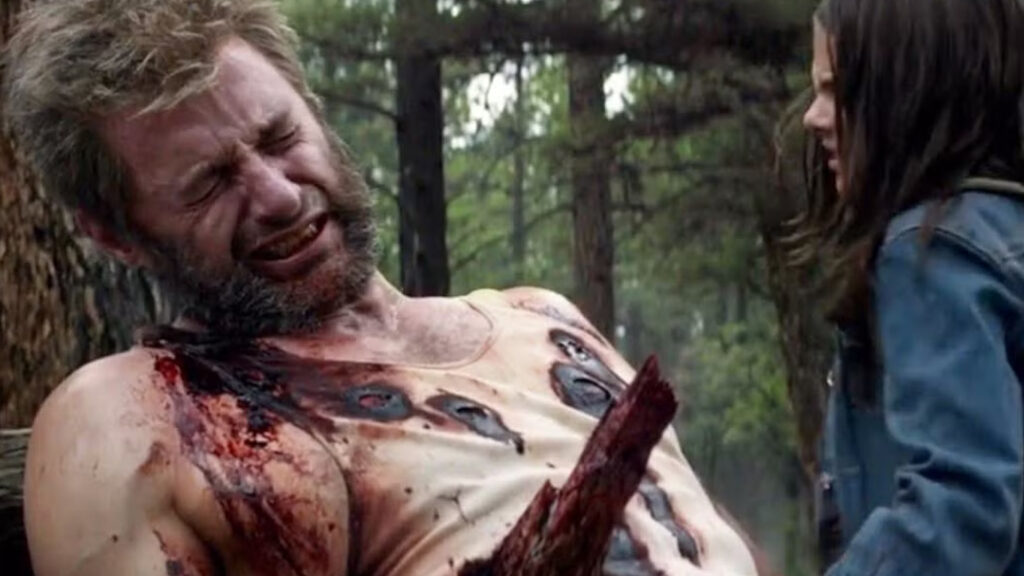
Superhero cinema rarely allows finality. Death is usually a pause, a contractual inconvenience smoothed over by multiverses, time travel, or a well-timed reboot. Logan refused that safety net. It insisted on an ending that could not be undone, and in doing so, it stripped the genre down to something raw and human.
This wasn’t the fall of a legend so much as the end of a long, punishing life. Logan doesn’t die at the height of his power or in the middle of a grand victory. He dies worn down, scarred, and exhausted, carrying decades of violence in his body and regret in his silence. The film frames him not as a mythic hero, but as a man who has outlived his era and is finally running out of ways to keep going.
What gives this fictional death its weight is what he chooses to protect. Not the world, not a city, not an abstract ideal, but something small and fragile. A child. A future he will never get to see. In that moment, heroism becomes intimate. The stakes are no longer cosmic, they’re personal, and that shift makes the sacrifice feel earned rather than obligatory.
The absence of spectacle is the final, devastating choice. No triumphant score, no slow-motion victory, no wink toward resurrection. Just dirt, blood, and a quiet understanding that this is the end. When Logan finally allows himself to stop, the loss feels honest because it isn’t softened or deferred. The film lets him die as he lived in the end: not as a symbol, but as a man who gave everything he had left.
Tony Stark’s Death in Avengers: Endgame: The Fictional Death Designed to Let Us Grieve Safely
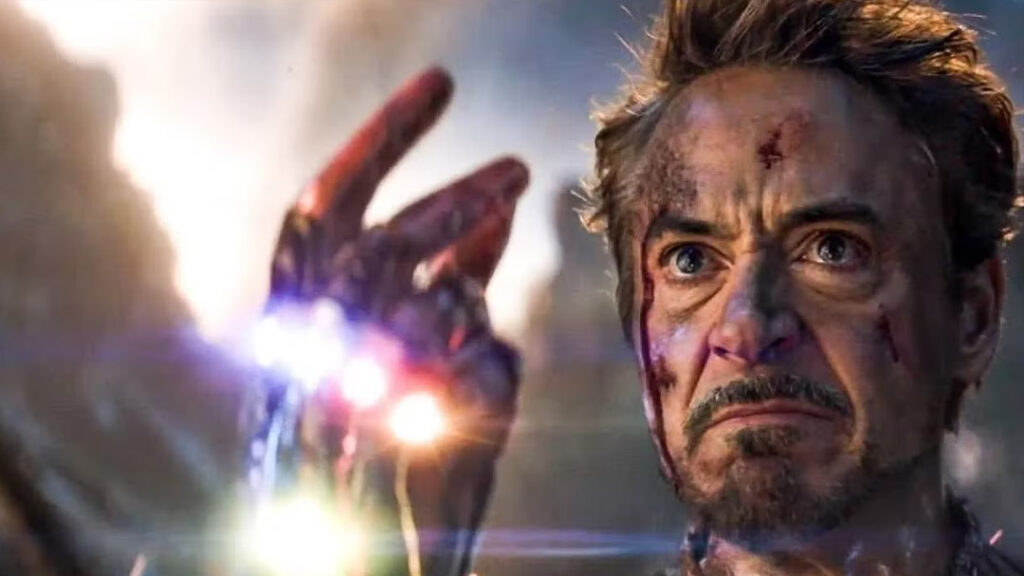
Tony Stark’s death was monumental, but it was also meticulously engineered to land safely. This was not chaos or cruelty; it was design. The sacrifice saves everyone, the threat is neutralized, and the story pauses long enough to let the weight register. From the moment he makes his choice, the film builds a soft perimeter around the loss, guiding the audience through grief rather than dropping them into it.
The farewell is deliberate in every sense. There are words spoken, hands held, a promise that the world will be okay. Tony doesn’t vanish mid-battle or die alone in confusion. He is surrounded, seen, and acknowledged. His final moments offer reassurance not just to the characters on screen, but to the audience itself. This is a goodbye that understands how attached we’ve become and takes care with that attachment.
Equally important is the legacy left behind. The universe doesn’t fracture in his absence. There is a daughter who will grow up knowing who her father was, a team that carries his influence forward, and a world visibly changed for the better by his choices. The film ensures that his life, and his death, have meaning that extends beyond the moment.
That’s why the grief, while real, never feels destabilizing. This was sorrow with guardrails. Designed to hurt, but not to shatter. It allows viewers to mourn without feeling abandoned, to cry without losing footing. In a genre built on spectacle, Tony Stark’s death stands out not because it breaks the audience, but because it holds them steady while asking them to let go.
Wash’s Death in Serenity: The Fiction Death That Refused Narrative Mercy
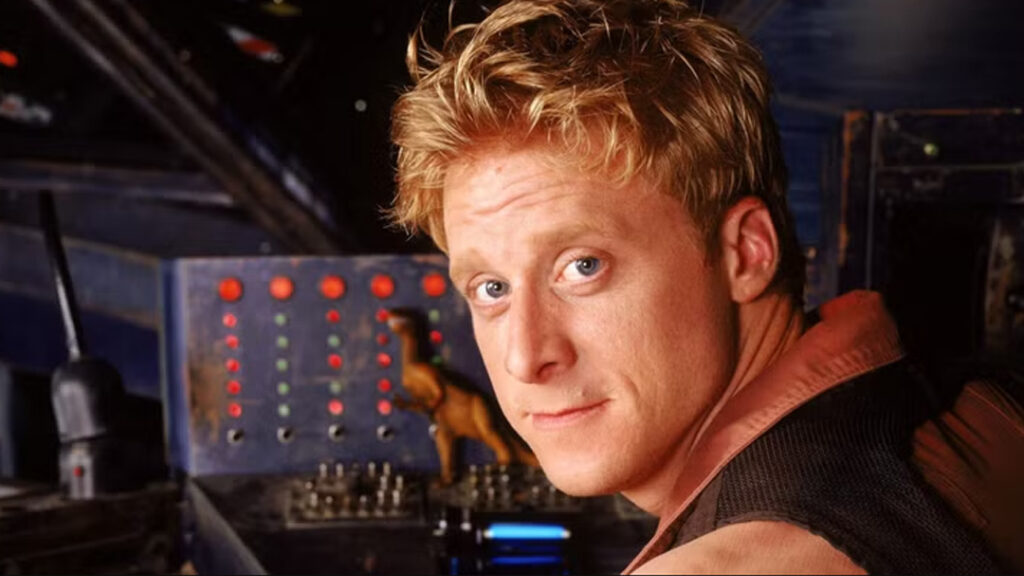
Wash’s death remains infamous precisely because it violates the unspoken rules of genre storytelling. There is no buildup, no ominous pause, no cinematic signal that danger has arrived to collect its due. One moment he’s delivering relief through humor, steady hands on the controls, everything exactly as it should be. The next, there is only silence. The shift is so abrupt it feels less like a plot beat and more like an accident the story itself didn’t mean to cause.
That lack of heroic framing is what makes the shock so brutal. Wash doesn’t go out in a blaze of glory or with a final quip. He isn’t given time to understand what’s happening, and neither is the audience. The moment refuses catharsis. It mirrors the kind of loss that happens in real life, where laughter can stop mid-breath and the world doesn’t bother to explain itself.
And yet, the placement of his death late in the story subtly dulls the long-term ache. The narrative moves toward resolution, leaving little room to fully sit with the grief. There’s no extended aftermath, no space to process what’s been taken. That, too, is part of why the moment still stings. It feels unresolved, unfinished.
Fans have never quite forgiven it, not because it was poorly executed, but because it was too effective. Wash’s death cut against the comfort of ensemble storytelling, reminding viewers that even the lightest presence can be extinguished without ceremony. The resentment lingers because the loss does, sharp-edged and unnegotiated, a reminder that sometimes stories hurt simply because they choose to.
Why These Fictional Deaths Still Haunt Us
The most painful fictional deaths aren’t always the loudest. They don’t rely on explosions, last words shouted over swelling music, or the promise that something bigger will rise in their place. Instead, they arrive softly, with inevitability, grounded in love, time, and the small human choices that make loss feel personal. They hurt because they don’t feel like story logic. They feel like life intruding where we expected escapism.
These are the deaths that resist dismissal once the credits roll. They linger because they resemble real loss too closely. The kind without villains to blame, without clean resolutions, without meaning that reveals itself on cue. They remind us of empty chairs, unfinished conversations, and the strange way the world continues unchanged after something essential is gone.
That’s why these moments endure. Not because the characters were real, but because the emotions were. Fiction gave us a place to practice grief, to recognize it, to carry it safely for a while. These characters may exist only on screens and pages, but the ache they leave behind is entirely ours.