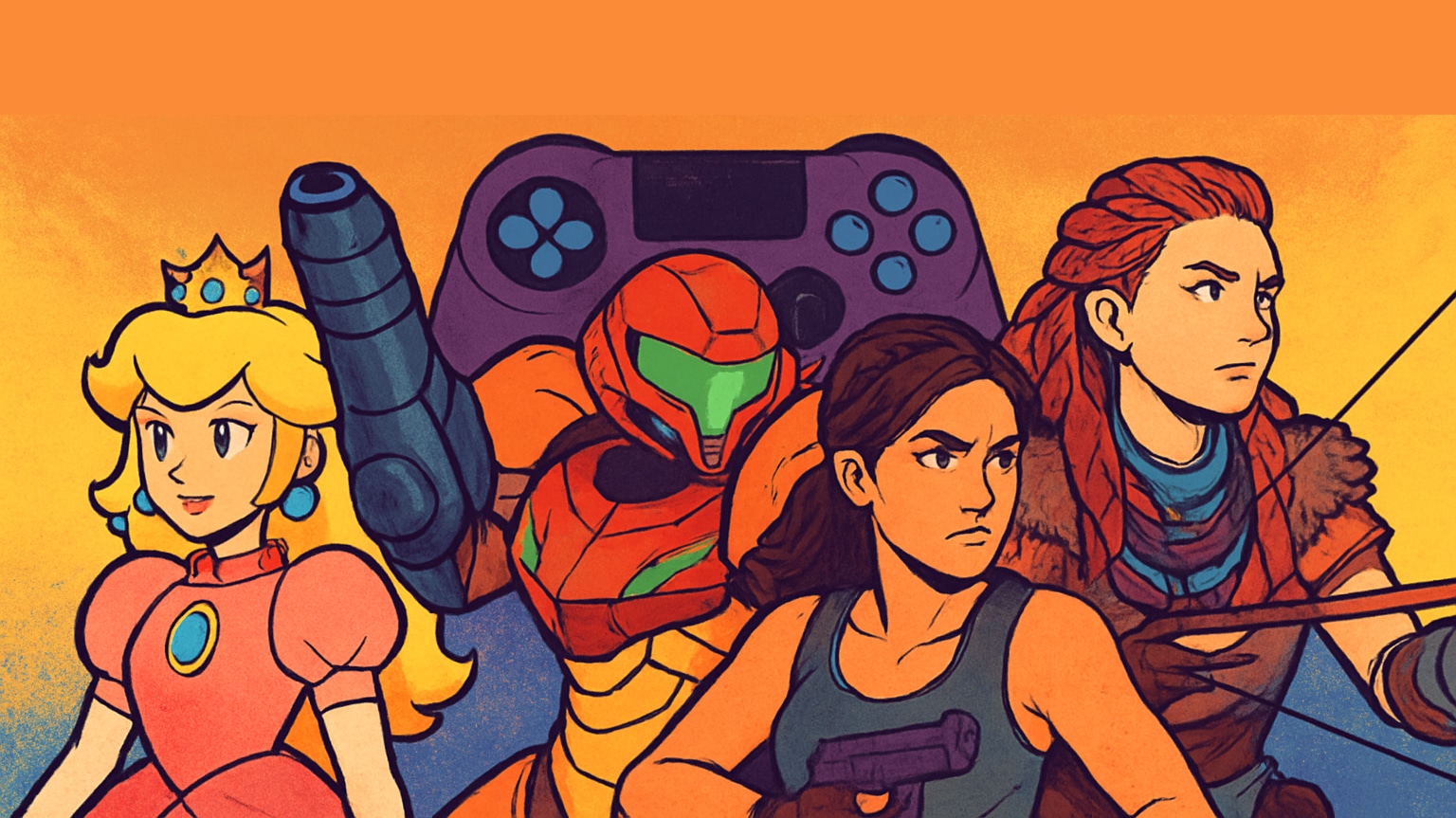
Once upon a loading screen, the video game world was basically a boys’ club with bonus pixels. Representation for women in games was so thin you could practically see through it. Most female characters existed to be kidnapped, kissed, or conveniently killed in the opening sequence – essentially serving as emotional fuel for a male protagonist’s hero’s journey. They weren’t characters; they were objectives, accessories, or background décor in digital worlds designed for men.
But fast-forward a few decades, and the landscape has finally hit restart. Women in video games have gone from background sprites to fully realized heroes – taking charge of narratives, leading franchises, and redefining what representation in gaming even looks like. They’re no longer waiting to be rescued. They’re actually the ones doing the rescuing.
This evolution is bigger than a few character redesigns or modern reboots. It’s gaming growing up and finally acknowledging that representation matters. From pixel princesses to post-apocalyptic survivors, the rise of female protagonists hasn’t just been a glow-up – it’s been a full-blown revolution.
Princess Peach: The OG Hostage of Gaming
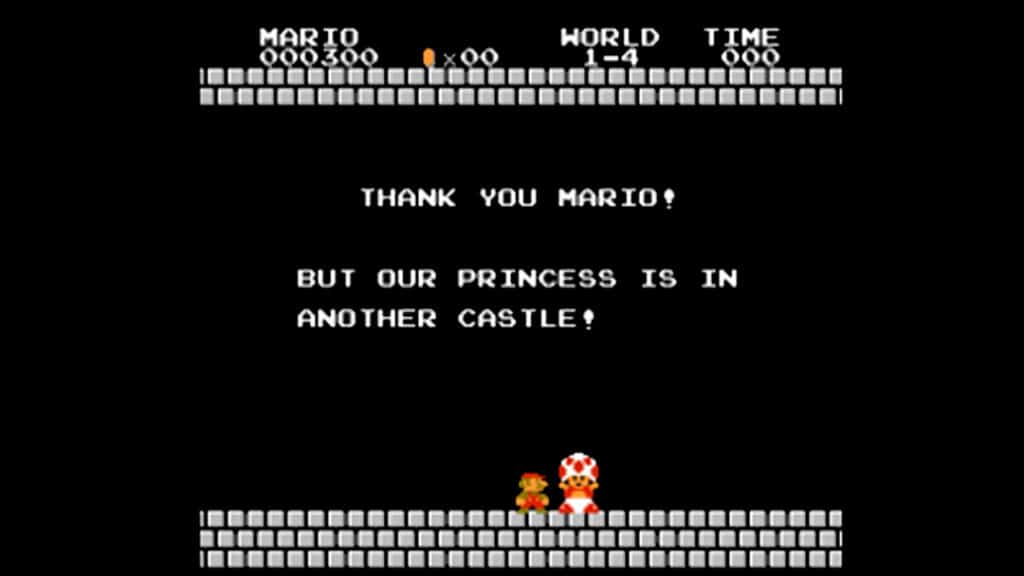
Let’s be honest: Princess Peach spent more time in Bowser’s dungeon than he did.
In 1985, Nintendo dropped Super Mario Bros., and Peach instantly became the Mushroom Kingdom’s most frequently abducted royal. Her résumé? Kidnapped. Again. And again. If she could’ve left a Yelp review for her kingdom’s security, it would’ve been a savage one-star.
For decades, Peach’s “royal duties” were basically waiting around while Mario ran through lava levels for her benefit. Even when she finally got her own game, Super Princess Peach, her powers were… emotion-based. She literally cried enemies into submission. Peak early-2000s representation.
But then came the 2023 Super Mario Bros. Movie, and Peach finally got the representation upgrade she deserved. She wasn’t just a prize at the end of the quest – she was training Mario, wielding weapons, and confidently stepping into main-character territory. It only took forty years, but hey, some power-ups take a while to load.
Peach’s evolution shows something important: even the most stereotyped characters can grow when representation is taken seriously.
Subscribe to Fictionphile
No spam. We never sell your info.
Lara Croft and Samus Aran: The First Real Female Protagonists in Gaming
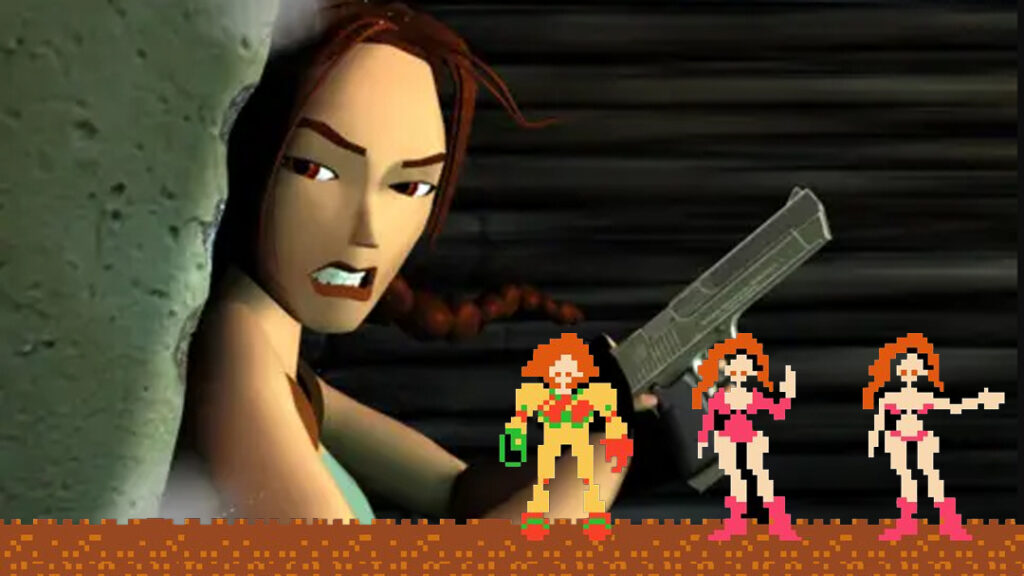
The late ’80s and ’90s gave us dial-up Internet, blocky polygons, and – thankfully – two women who changed the representation game forever: Samus Aran and Lara Croft.
Samus Aran: The Twist That Started a Movement
In 1986’s Metroid, players spent hours blasting aliens, navigating labyrinthine corridors, and assuming they were controlling a male protagonist – until the helmet came off. Samus was a woman. Cue the collective jaw-drop of an entire generation of gamers: “Wait – what?” It was more than a twist ending; it was a statement.
Without fanfare or marketing gimmick, Nintendo had flipped gender expectations on their head, challenging the unspoken assumption that heroes had to be men. Samus wasn’t sexualized, overly accessorized, or a reward for male players. She was competent, fearless, and fully capable – a revelation in a medium that had rarely given women such agency.
Lara Croft: The First Global Female Gaming Icon
Then in 1996 came Lara Croft, whose influence on gaming representation cannot be overstated. She wasn’t waiting for a hero – she was the hero. Smart, stylish, sarcastic, and a walking example of how women could lead action-adventure stories. Yes, her early design leaned into male-gaze territory, but beneath the triangles and tank tops was a genuinely iconic character.
By the time the 2013 Tomb Raider reboot rolled around, the character had undergone a full transformation. Gone were the exaggerated proportions and cartoonish sensibilities, replaced with scars, grit, and a fully human emotional core. This Lara was strong yet vulnerable, smart yet scared, a survivor shaped by circumstance rather than design. She was no longer just a cultural icon – she was a complex protagonist whose journey players could emotionally invest in.
Together, Samus and Lara didn’t just level up representation – they rewrote the rulebook. They proved that women could lead major franchises, headline marketing campaigns, and carry narratives that were as thrilling, tense, and memorable as those starring male protagonists. More importantly, they set the stage for the next generation of heroines, paving the way for characters like Aloy, Ellie, and countless others who would inherit the mantle of fully realized, multidimensional female protagonists.
In retrospect, the ‘90s weren’t just about pixelated graphics and dial-up modems – they were about breaking assumptions, challenging norms, and quietly, pixel by pixel, changing what it meant to be a hero in gaming.
Aloy, Ellie, and the Rise of Complex Female Protagonists
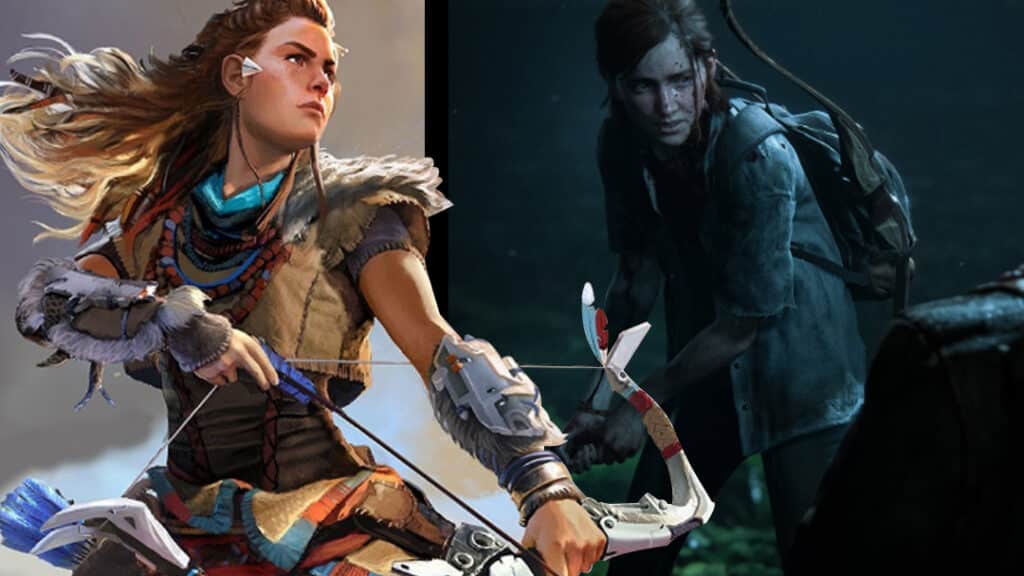
If the ‘90s broke the mold, the 2010s didn’t just break it – they threw it into hyperspace with a rocket launcher of nuance, grit, and narrative ambition. This was the decade when “female protagonist” stopped being a marketing checkbox and started meaning something real.
Aloy and the New Era of Non-Sexualized Game Heroines
Enter Aloy in Horizon Zero Dawn and Ellie in The Last of Us, two characters who made the phrase synonymous with “complex human being.” Suddenly, women in games weren’t just there to look good in a cutscene – they were carrying entire worlds on their shoulders, and doing it with brains, heart, and enough charisma to make Nathan Drake take notes.
Aloy is the ginger apocalypse archer we didn’t know we were waiting for. She hunts robot dinosaurs, scales towering ancient ruins, and hacks old-world tech like a bow-wielding Indiana Jones crossed with a Reddit-level lore enthusiast. And she does it all without pandering to the male gaze. No high heels that would snap in combat, no awkwardly tacked-on romance, no “sexy-but-deadly” tropes. Just a bow, a brilliant mind, and main-character energy that could make even Tony Stark pause mid-sarcasm. She’s not just strong – she’s clever, capable, and unapologetically herself, a heroine proving you don’t need impractical armor to be unforgettable.
Ellie and Emotion-Driven Storytelling in Modern Games
Ellie, meanwhile, is surviving fungus zombies, moral gray areas, and arguably the worst post-apocalyptic road trip since Mad Max took a wrong turn through Stranger Things. Over the course of The Last of Us and its sequel, she evolves from a sarcastic, guitar-strumming teen into a woman forged in grief, rage, and gut-wrenching choices. Her story hits harder than a clicker ambush. She makes you laugh, cry, and occasionally want to toss your controller out the nearest window – but that’s the point.
The best part? Aloy and Ellie aren’t defined by combat prowess, catchphrases, or being a female Lara Croft archetype. They’re human. They get hurt. They make mistakes. They’re awkward, funny, fierce, and heartbreaking all at once. And that’s what makes them unforgettable. These characters are the blueprint for the next generation of video game protagonists: fully realized, deeply human, and unapologetically themselves.
These aren’t “strong female characters.” They’re real people – and that’s what makes them powerful.
Indie Mode Activated: When Feelings Became the Final Boss
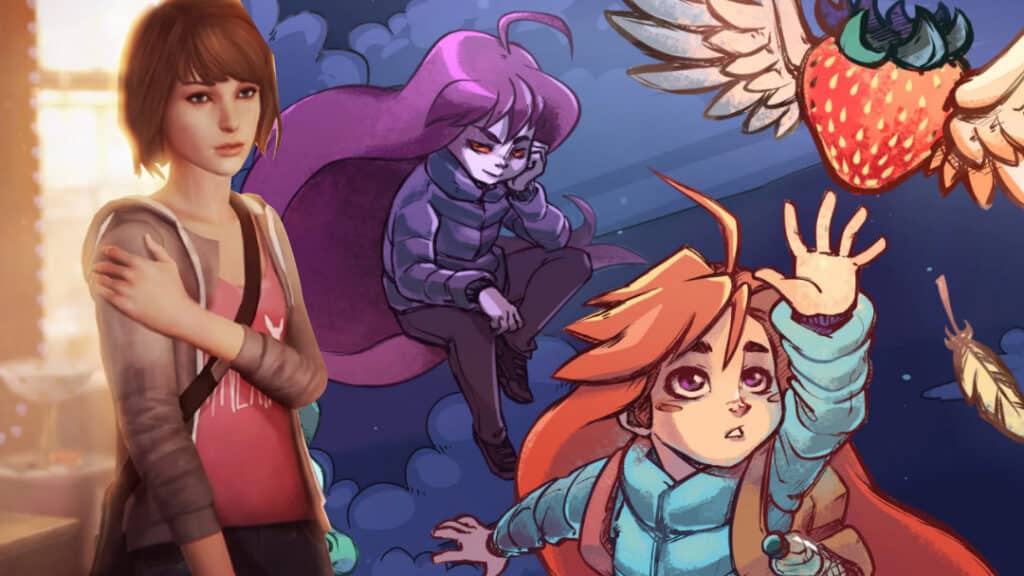
And then the indie game revolution said, “What if representation wasn’t just about who the hero is – but what they feel?”
Life is Strange: Empathy and Queer Representation
In Life is Strange, Max Caulfield can rewind time, but her real superpower is empathy. It’s part Twin Peaks, part teenage fever dream – a story where every choice hurts a little, and every rewind feels like cheating fate. But what makes Max’s journey resonate isn’t her time travel – it’s her friendship (and maybe something more) with Chloe Price.
For one of the first times in a mainstream game, a queer relationship wasn’t treated like a side quest or tragic spectacle. It just was. Awkward, intense, tender, flawed – and that authenticity made Life is Strange a landmark moment in gaming’s emotional evolution. Max and Chloe weren’t damsels or warriors – they were kids trying to find meaning before the world literally ended.
That relatability struck a nerve. Suddenly, players realized games didn’t have to be about saving kingdoms or shooting aliens. They could be about saving yourself.
Celeste and Mental Health in Modern Gaming Narratives
Then came Celeste, a deceptively simple mountain-climbing platformer that turned anxiety into an actual boss fight. Madeline’s journey up Celeste Mountain is a metaphor for mental health struggles * each failed jump, each fall, another battle with self-doubt. The mountain isn’t just terrain; it’s her mind.
And it’s hard. You die hundreds of times, but each retry feels like resilience. The game’s message is refreshingly direct: you don’t beat depression by avoiding it – you face it, fall, and climb again. Celeste didn’t just make you play; it made you heal.
The Ripple Effect: When Indie Games Got Emotional
Indies cracked open the medium’s potential for emotional storytelling. Undertale redefined morality through mercy and humor. Gris turned grief into a watercolor symphony. Night in the Woods used talking cats to unpack class, failure, and the quiet horror of adulthood. More recently, games like A Space for the Unbound and Goodbye Volcano High are carrying that torch – offering queer, neurodiverse, and culturally specific stories that feel less like “representation” and more like real life.
These titles reminded players – and publishers – that emotions don’t weaken gaming -they expand it. They proved that gameplay and storytelling aren’t enemies; they’re partners. When mechanics reflect emotion – when rewinding time, jumping a ledge, or choosing a dialogue option feels personal – you stop just playing a character. You become them.
Why It Matters
The indie revolution didn’t just make us cry – it made us listen. It showed that games could be intimate, empathetic, even therapeutic. And it laid the groundwork for the next era of female protagonists and emotionally rich narratives, where heroes aren’t defined by their kill counts, but by their capacity to feel.
Because sometimes, the hardest boss battle isn’t a dragon or an alien warlord – it’s your own reflection.
The Future of Women in Games: Who Gets to Be the Hero?
We’ve come a long way from “save the princess,” but the next stage of representation is about who gets to be the hero – and who gets to make those creative decisions behind the scenes.
Representation Statistics in Today’s Gaming Industry
Representation still has a way to go. According to recent industry/diversity reports:
Less than 5% of games released in 2023 featured lead characters from minority backgrounds.
Disabled characters remain under 5% of protagonists – rare enough that it’s still news when one shows up.
Women remain underrepresented on game covers and in main storylines, and when they are protagonists, sexualization and stereotypical story arcs (tragic backstories, trauma as default) still dominate.
So yeah, we’re making gains – but it’s slow, and many of the new “female lead” stories are still echoing old tropes.
Recent Wins in Diversity and Inclusive Game Design
These are the kinds of games and projects pushing the boundary:
Paper Mario: The Thousand-Year Door (2024 Remake) – brought formal acknowledgement to Vivian as a trans character, something fans have speculated for years. Nintendo’s move was small but meaningful, earning GLAAD nods.
Dragon Age: The Veilguard – this BioWare RPG is going further with character customization, allowing gender-fluid or nonbinary pronouns, top surgery scars, and deeper trans identity options in narrative choices.
Sojourn in Overwatch – a Black woman with rich lore, distinctive visual design (her hair, style), and attention to cultural detail. It’s more than token: it’s design that signals identity.
Butterfly Soup – an indie visual novel about Asian-American queer girls; it doesn’t rely on “manufactured trauma,” but instead focuses on identity, friendship, romance, and normal teenage weirdness.
Behind the Scenes: Why Diversity Is Gaining Ground
Because representation in protagonists starts with representation in creators. Trends to watch:
More women, queer, and nonbinary people working in game-writing, art, direction. When dev teams are more diverse, storylines get more layered. Fiction isn’t just “hero fights bad guys” – it’s “hero wonders, hero hurts, hero questions.”
Smaller studios and indies are doing work the big ones often shy away from: games exploring disability, mental health, queer identity without trying to “distance” the narrative for mass-audience palatability.
Tools and systems are better. More games offering robust character customization (gender, body type, identity, pronouns, scars, cultural aesthetics) because crowd demand is real. Players want to see themselves, not just generic avatars.
What’s Still Missing for Full Representation
If we had to name the boss fights still ahead, they’d look something like this:
Intersectional leads: Women of color, trans women, Indigenous women, disabled women, etc., whose stories are not just about victimhood but about complexity, joy, leadership, resilience.
Genre diversity: We see a lot of fantasy / post-apocalypse / action-adventure, but fewer in genres like strategy, horror (beyond “final girl”), sci-fi beyond dystopia, simulation, etc.
Mainstream visibility: Indie games do great with this stuff, but AAA needs to catch up -because big-budget titles reach way more people and help shift mainstream norms.
Authenticity & agency: No more tragic backstory as a default. Let women lead for why they exist, not just how they suffered. Let characters make moral choices, have love lives, fail, mess up, heal.
When the dev team looks like the real world, the worlds they build start feeling real, too. And if gaming as a medium is going to live up to its promise – of immersion, empathy, and adventure – this next wave of protagonists isn’t just about changing the hero type. It’s about changing who feels like a hero.
Final Boss: What True Representation in Gaming Really Means
From Princess Peach’s eternal kidnappings to Ellie’s brutal quest for survival, women in video games have gone from passive pixels to powerhouse protagonists.
We’ve seen them grow from prizes to players, from trophies to trailblazers. They fight, they cry, they save the world – and sometimes, they just exist, no explanation needed.
The next chapter of gaming doesn’t need women who are “strong for girls.” It needs women who are real for everyone.
Because if gaming has taught us anything, it’s that when women take the controller, the story gets a whole lot more interesting.