Or: When the First Sentence Breaks the Rules and Gets Away With It
Writing advice loves clean opening lines. Elegant. Economical. Whispering promises like a well-trained bard who knows exactly how much mystery to leave in the room and exactly when to leave it there.
You’ve seen the checklists. Start in motion. Avoid weather. No mirrors. No info-dumps. Make every word earn its keep. Be subtle. Be precise. Be invisible.
And then there are opening lines that do none of that.
They kick the door instead of knocking.
They trip over the rug.
They knock over a lamp and say nothing about it.
These lines are loud, awkward, blunt, or suspiciously casual. They explain too much or almost nothing. They sound like they were written by someone who either doesn’t know the rules or knows them so well they got bored.
By the handbook, they’re bad.
Too on-the-nose.
Too strange.
Too confident.
Too small.
Too much of a tone before the story has “earned” it.
And yet the books endure.
Not because the sentences are secretly perfect, but because they make a different kind of promise. Not polish. Not restraint. Not even immediate intrigue.
Audacity.
These opening lines say: This is how I tell stories. If that bothers you, better to find out now. They don’t court the reader so much as stand still and wait to see who stays.
That confidence is doing work. Sometimes more work than elegance ever could.
Of course, this is where things get dangerous. For every opening line that breaks the rules and gets away with it, there are dozens that break them and faceplant into page one. Audacity without control is just noise. Confidence without intention is a shrug dressed up as style.
So what separates the rule-breakers that work from the ones that don’t?
That’s where the autopsy comes in.
Let’s crack a few of these sentences open and see what’s actually keeping them alive.
Bad examples of opening lines in fiction
So what do these rule-breaking openings actually look like on the page? Not in theory. Not in workshop hypotheticals. In real books that survived editors, readers, and time. The following first lines aren’t models of restraint or elegance. They’re blunt instruments, odd ducks, tonal gambles. By every polite rule of craft, they shouldn’t work. And yet they do. Let’s look at a few opening lines that broke the rules, lived to tell the tale, and taught us something dangerous along the way.
The Overexplainer
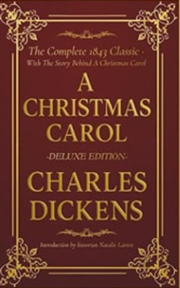
“Marley was dead: to begin with.”
That’s the opening line of A Christmas Carol.
This sentence does not trust you.
It doesn’t flirt. It doesn’t tease. It doesn’t warm up. It grabs you by the lapels, makes eye contact, and says: Pay attention. This man is extremely dead.
Not metaphorically dead. Not spiritually dead. Not “we’ll unpack this later” dead.
Dead-dead.
From a modern craft perspective, this is a small catastrophe. It’s blunt. It’s redundant. It’s doing the narrative equivalent of underlining itself in red ink. Any contemporary workshop would circle it and write too on-the-nose in the margins.
And yet, it works.
Part of the reason is structural. A Christmas Carol is not a mystery. It’s a morality play wrapped in a ghost story. There is no suspense about Marley’s condition, only about its consequences. By announcing his death immediately, Charles Dickens clears the runway. The story doesn’t waste time pretending this is a surprise waiting to be sprung.
But the real magic is in the voice.
“To begin with” is doing heavy lifting here. It’s casual. Almost chatty. It sounds like Dickens pulling up a chair and letting you in on a fact before launching into something far more elaborate. There’s a wink in it. A sense that the narrator is ahead of you, comfortable, already arranging the pieces.
The sentence establishes an authority that doesn’t need to be sleek. Dickens sounds like someone who has told this story before. Someone who knows where it’s going and is confident enough to start with a hammer instead of a scalpel.
The bluntness becomes a feature, not a flaw. It sets expectations for a story that will be earnest, theatrical, and unafraid of stating its moral position out loud. This is not a book interested in ambiguity. It is interested in impact.
The promise here isn’t subtlety.
It’s control.
Dickens tells you, in seven words, that he is driving. You are a passenger. And if the opening feels a little awkward, that’s fine. He’s already moving.
That’s why the line gets away with it. Not because it’s elegant, but because it’s honest about the kind of story it’s telling.
The Boring One

“Call me Ishmael.”
That’s it. That’s the entire opening line of Moby-Dick.
By modern standards, this sentence is doing almost nothing. There are no stakes. No movement. No implied danger. No promise of drama. It doesn’t even properly introduce the narrator. It offers a name, not a biography, and immediately undercuts its own authority. Call me suggests convenience, not truth.
From a craft-advice perspective, this is heresy. Where’s the hook? Where’s the tension? Where’s the reason to care?
And yet the line is quietly radical.
“Call me” is an invitation. Not a demand. Not a proclamation. It places the reader in conversation with the narrator before the story has even started. You’re not being addressed as an audience. You’re being addressed as a listener. A companion. Someone who will be walking alongside this voice for a very long time.
That choice tells you what kind of book this is. Moby-Dick is not plot-forward in any modern sense. It is voice-forward, obsession-forward, digression-forward. The story will wander. It will lecture. It will fixate. The opening line warns you gently instead of pretending otherwise.
The simplicity also becomes unsettling once you know where the book goes. The refusal to assert a real name mirrors the instability of the narrator himself. Identity, authority, and truth are already soft around the edges. The line looks neutral, but it isn’t. It’s quietly slippery.
Most importantly, the sentence keeps its promise.
This book is not here to entertain you efficiently. It’s here to keep you company while it spirals. The opening line says, If you stay, we’re in this together.
The promise isn’t excitement.
It’s companionship.
You’re not boarding a roller coaster. You’re signing up for a long voyage with a voice that will talk to you about whales, faith, madness, classification systems, the color white, and the dangers of thinking too much.
So many whales.
And the book never pretends otherwise.
The Impossible Personification
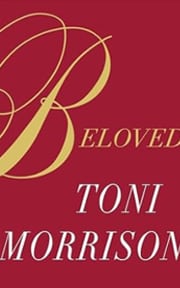
“124 was spiteful. Full of a baby’s venom.”
That’s how Beloved begins.
This line breaks several rules at once, and it does so without apology. The subject isn’t a person but a number. A house address. Something inert. Then Toni Morrison loads it with emotion, intent, and malice. Spiteful. Venom. From a baby, no less.
From a conventional craft perspective, this is disorienting. Readers are often told to begin with grounded action, a clear viewpoint, something recognizably human. Instead, Morrison opens with a location behaving like a creature and a baby described with language usually reserved for snakes.
It’s unsettling. Purposefully so.
The sentence tells you immediately that this will not be a polite ghost story. This haunting is not abstract or symbolic or safely distant. It is domestic. It lives in the walls. It sleeps in the rooms. It has history, memory, and rage. The supernatural here is inseparable from the family that occupies the space.
By starting with the house, Morrison reframes the idea of setting. 124 isn’t a backdrop. It’s a participant. The trauma hasn’t passed through and moved on. It has settled. It has taken up residence.
The phrase baby’s venom does especially sharp work. Babies are supposed to be innocent, harmless, unformed. Venom implies intent and damage. Morrison collapses that contradiction instantly. This is a story where innocence has been violated so completely that even the idea of innocence becomes unstable.
That’s the real promise of the opening line.
Beloved will treat haunting not as a metaphor you can keep at arm’s length, but as something bodily and intimate. The past is not gone. It bites. It resents. It demands attention. And it does so from inside the home, from inside motherhood, from inside love itself.
The sentence doesn’t explain any of this. It doesn’t need to. It tells the truth about the kind of pain the book is willing to examine. The reader may not yet understand what 124 is or why it’s angry, but they understand one thing immediately.
This haunting is personal.
And it is not finished.
The Tonal Whiplash
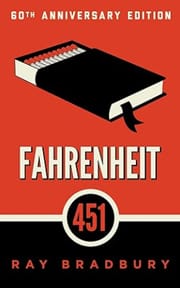
“It was a pleasure to burn.”
That’s how Fahrenheit 451 begins.
On paper, this sentence is a red flag. Pleasure and burning should not be on speaking terms, let alone shaking hands. The line risks sounding edgy for the sake of shock, the kind of opening line that tries to jolt the reader awake with moral whiplash instead of earned tension.
It’s only five words, but every one of them feels wrong.
And that’s exactly why it works.
Ray Bradbury doesn’t ease you into this world. He drops you directly into its corrupted value system. Burning isn’t tragic here. It isn’t necessary. It isn’t even neutral. It’s pleasurable. The sentence doesn’t argue this point. It states it casually, as if daring you to object.
That casualness is doing the damage.
There’s no explanation yet. No context. No justification. The book doesn’t tell you why burning is pleasurable or what is being burned. It lets the discomfort bloom first. You feel the wrongness in your gut before your brain has enough information to file a complaint.
This is a masterclass in reframing morality through tone. The line teaches you how this society feels before it teaches you how it functions. By the time the mechanics arrive, the reader is already unsettled, already suspicious, already leaning forward.
It’s also a promise about the book’s method. Fahrenheit 451 isn’t interested in subtle corruption or slow moral erosion at the sentence level. It’s interested in blunt inversions. In showing how language itself can normalize the unthinkable.
Pleasure isn’t a side effect here. It’s policy.
That’s the real promise of the opening line: cognitive dissonance as a feature, not a bug. The novel earns that promise by patiently, relentlessly showing how a culture trains itself to enjoy its own destruction, one justified pleasure at a time.
The sentence works because it tells the truth early. This world is broken. It knows it. And it smiles anyway.
By the time the reader understands why burning feels good, the damage is already done.
The Taboo Confession
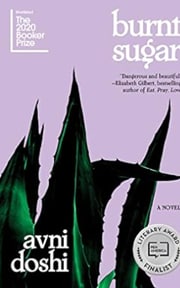
“I would be lying if I said my mother’s misery has never given me pleasure.”
That’s the opening line of Burnt Sugar.
This sentence is dangerous in a quiet, intimate way. It doesn’t shout. It confesses. And what it confesses violates one of fiction’s most protected assumptions: that a child’s love for a parent, especially a mother, is fundamentally benevolent.
Pleasure taken in a parent’s suffering feels taboo. It reads as cruel, petty, even monstrous. The line risks alienating readers before they’ve had time to settle in, before empathy has been carefully scaffolded. Traditional narrative wisdom would tell you to soften this. To contextualize it. To earn it later.
Avni Doshi does none of that.
Instead, the sentence insists on emotional accuracy over palatability. The phrase I would be lying frames the line as an act of honesty rather than provocation. This isn’t a character boasting about cruelty. It’s a narrator admitting something she would rather not feel, but does.
That distinction matters.
The opening line tells the reader that this story will not offer a sanitized version of love. Burnt Sugar is about dependency, resentment, memory, and the corrosive intimacy of care. It is about how love can curdle when obligation replaces choice, and how guilt and tenderness can exist alongside vindictive relief.
The pleasure in the sentence isn’t sadistic. It’s reactive. It comes from long imbalance, from a lifetime of being shaped and constrained by another person’s needs. The line doesn’t deny affection. It exposes how affection can become twisted under pressure.
That’s the promise being made.
This novel will tell the truth about emotional messiness. It will linger in feelings people prefer not to admit, let alone center. The narrator isn’t asking to be liked. She’s asking to be believed.
By beginning here, Doshi establishes a contract of radical honesty. The reader is warned immediately: this relationship will be ugly, complicated, and unresolvable. If you stay, you stay on those terms.
The sentence works because it doesn’t posture. It doesn’t explain itself. It simply tells the truth as the narrator experiences it, even when that truth is uncomfortable.
And once that promise is made, the rest of the novel has no reason to pretend.
The Purple One
“It was a dark and stormy night.”
Yes, that line. From Paul Clifford.
This sentence is so famously bad it has escaped the book entirely and become cultural shorthand. It’s the punchline to writing jokes, the mascot for purple prose, the phrase invoked whenever someone overwrites atmosphere like they’re being paid by the adjective.
By modern standards, it’s indefensible.
It’s vague. It’s generic. It tells instead of shows while also somehow showing nothing specific at all. Darkness where? Stormy how? Night, obviously. Every dial is turned to eleven before the story has earned even a three.
And yet, when it was published, it worked.
Nineteenth-century readers weren’t allergic to melodrama. They expected it. Gothic and sensational fiction traded in excess the way modern thrillers trade in speed. Atmosphere wasn’t a garnish. It was the meal. Readers wanted thunder. They wanted mood spelled out in capital letters. They wanted to feel the weather pressing in before they met a single character.
The sentence also matches the genre’s emotional temperature. Paul Clifford is not a restrained book aiming for psychological subtlety. It’s a high-color, high-feeling melodrama. The opening line doesn’t lie about that. It announces itself loudly and unapologetically.
Most importantly, subtlety simply wasn’t the cultural goal. Victorian popular fiction prized immediacy and sensation. The opening line’s job was not to intrigue through implication but to establish tone instantly and unmistakably. Darkness meant danger. Storms meant turmoil. The reader knew exactly what kind of story they were walking into.
The promise here isn’t precision.
It’s vibes.
Modern readers laugh because our tastes have shifted. We’ve trained ourselves to value restraint, specificity, and irony. What once felt thrilling now feels blunt. What once signaled drama now signals parody.
That doesn’t make the line timelessly bad. It makes it temporally honest.
This is the useful lesson buried under the meme. “Bad writing” is often just writing that has outlived its moment. Craft rules aren’t laws of physics. They’re trends, shaped by audience expectation and cultural appetite.
Which means today’s most elegant opening line may be tomorrow’s punchline.
And somewhere in the future, someone will be rolling their eyes at our restraint the way we roll ours at storms and darkness.
The Confusing One
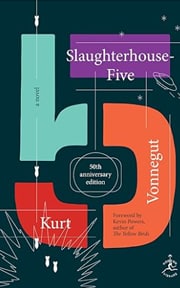
“All this happened, more or less.”
That’s the opening line of Slaughterhouse-Five.
From a craft-advice perspective, this sentence is a problem. It gestures vaguely at events without naming a single one. It refuses to orient the reader in time, place, or perspective. It opens with a summary so imprecise it almost negates itself. All this could mean anything. More or less undermines even that.
What happened?
When did it happen?
To whom?
And why does the narrator sound like he’s already hedging?
That unease is not an accident. It’s the entire operating system.
Kurt Vonnegut is telling you, immediately, that this story will not behave like a traditional war novel. Cause and effect will be unreliable. Chronology will bend. Authority will wobble. The book is about trauma, memory, and the impossibility of clean narratives in the face of mass death. Precision would be a lie.
The line primes the reader for irony and metafiction before either term enters the room. It sounds offhand, almost dismissive, but that casualness is doing moral work. Vonnegut isn’t claiming mastery over the story. He’s admitting the limits of telling it at all.
Most importantly, the sentence reframes what “truth” means in this book. Facts may blur. Timelines may fracture. Details may contradict themselves. But the emotional and philosophical reality of the experience remains intact.
This is a promise of honesty, just not the courtroom kind.
By opening with uncertainty, Slaughterhouse-Five gives itself permission to be fragmented, repetitive, and strange. The reader isn’t asked to follow a straight line. They’re asked to accept a damaged one.
The brilliance of the line is that it tells you this upfront. Nothing that follows violates the opening promise. The book never pretends it can fully explain the horror it depicts. It only promises to circle it, acknowledge it, and refuse to clean it up for comfort.
“More or less” isn’t a shrug.
It’s an ethical position.
And once you accept that, the rest of the book makes a terrible, devastating kind of sense.
The High-Stakes Secret
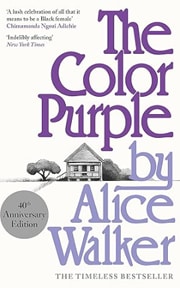
“You better not never tell nobody but God.”
That’s the opening line of The Color Purple.
This sentence is risky on multiple fronts, and it knows it. It opens in non-standard dialect, immediately breaking the “clarity first” rule that so much writing advice leans on. It also drops the reader into the middle of a command without context, speaker, or explanation. Someone is being warned. Someone is being silenced. The reason is withheld, but the danger is unmistakable.
From a conventional standpoint, this is disorienting. Who is speaking? To whom? About what? And why does the sentence sound like it doesn’t care whether you approve of its grammar?
That, of course, is the point.
Alice Walker begins not by orienting the reader, but by implicating them. The line doesn’t describe secrecy. It enforces it. The reader is cast, instantly, as the keeper of something unspeakable. The grammar reinforces the urgency. This is not polished speech. It’s survival speech. Language shaped by fear, power imbalance, and the knowledge that words themselves can be dangerous.
The phrase but God does devastating work. It establishes isolation immediately. There is no safe audience in the human world. There is no system that will listen or protect. God becomes the only permissible witness, not out of devotion, but necessity.
This opening line tells the truth about the novel’s emotional landscape before it tells you anything else. The Color Purple is a story about silencing, endurance, and the reclamation of voice. By beginning with a command to stay quiet, Walker shows you exactly what is at stake. Speech is not neutral here. It is a risk.
The use of dialect is not decorative. It asserts identity and authenticity while refusing respectability politics. The book will not translate itself into comfort for the reader. It will speak in the voice of the person living the story, not the one observing it from a safe distance.
That’s the promise.
You are not here to watch suffering from afar. You are here to listen. To hold what is said. To understand that telling the truth can be an act of defiance, and sometimes the most dangerous one available.
By the time the novel opens into letters, confession, and voice, the opening line has already done its work. It has created an intimate bond forged under pressure. The reader doesn’t just witness the story. They are entrusted with it.
And once that trust is given, there is no neutral way to read what follows.
The Actively Annoying One
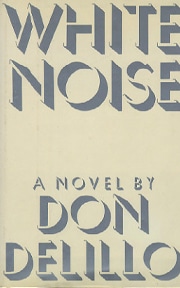
“People are afraid to merge on freeways in Los Angeles.”
That’s the opening line of White Noise.
At first glance, this barely qualifies as a beginning. It sounds like a blog post title. Or a half-formed observation someone mutters while gripping the steering wheel. There’s no character, no setting beyond a vague sprawl, no hint of plot. It doesn’t announce itself as literature so much as small talk.
Which is precisely the trap.
The sentence establishes an observational voice immediately. Detached. Declarative. Mildly irritated. It doesn’t ask a question or invite debate. It states a fact as if it’s obvious, as if everyone already agrees. That confidence pulls the reader in before they’ve decided whether the statement is even true.
More importantly, it signals satire without winking at you. There’s no punchline yet. No exaggeration. Just a perfectly ordinary anxiety framed as a general truth. The humor, such as it is, comes from recognition. You’ve heard this sentence before. Maybe you’ve thought it yourself.
That banality is deliberate. White Noise is obsessed with the background hum of modern life. The fears we normalize. The habits we accept. The way collective anxiety hides inside mundane observations until it feels invisible. Starting with something as small and specific as freeway merging tells you exactly where DeLillo plans to look.
The sentence also quietly introduces the book’s real subject: systems. Traffic systems. Media systems. Fear systems. The line isn’t really about driving. It’s about how people navigate shared spaces, shared risks, and shared uncertainty, badly and nervously and without talking about it directly.
That’s the promise of the opening. Not spectacle. Not drama. Attention.
The book is going to take the ordinary and worry it like a loose thread until the whole fabric starts to look strange. It’s going to examine everyday life so closely that it becomes absurd, then unsettling, then quietly horrifying.
And Don DeLillo keeps that promise relentlessly.
By the time White Noise escalates to toxic clouds, death anxiety, and media saturation, the reader has already been trained to see how the catastrophe was always hiding inside the casual observation. It started in traffic. It always does.
The brilliance of the line is that it doesn’t announce its ambition. It just clears its throat and starts talking.
And once it does, it never stops.
The Brutal Admission
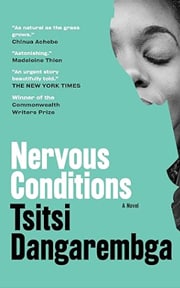
“I was not sorry when my brother died.”
That’s the opening line of Nervous Conditions.
This sentence is risky in the most immediate way possible. It presents a narrator who violates a social taboo before the reader has time to brace. Grief is supposed to look a certain way. Even silence is acceptable. But not sorry feels cold, even cruel. The line dares the reader to judge the speaker on page one.
From a conventional craft standpoint, this is dangerous territory. Writing advice often warns against making protagonists “unlikable” too early. Sympathy is supposed to be earned gently. This line doesn’t bother. It drops the bomb and waits.
And that’s exactly why it works.
The sentence tells the truth about the story’s emotional terrain. Nervous Conditions is not about clean feelings or socially acceptable responses. It’s about constraint. About how patriarchy and colonial power warp relationships so thoroughly that even something as sacred as grief becomes complicated, compromised, and morally uncomfortable.
The opening line doesn’t ask for approval. It asks for attention.
By starting here, Tsitsi Dangarembga signals that this story will not perform the emotions the reader expects. Love, resentment, ambition, relief, guilt. They will coexist, overlap, and contradict each other. The narrator’s honesty matters more than her likability.
Crucially, the sentence isn’t provocative for shock value. It’s precise. Once the context unfolds, the emotion makes sense. The brother’s death represents not just loss, but the loosening of a system that favored him and constrained her. The line doesn’t deny grief. It complicates it.
That’s the promise being made.
This will be a story where internal truth outweighs social performance. Where uncomfortable honesty is treated as more ethical than polite emotion. The opening line prepares the reader for that moral stance immediately.
If the sentence offends you, the book is already doing its job.
It tells you, right away, that this story will not soften itself to be more palatable. It will tell the truth, even when that truth is socially inconvenient. And once you accept that contract, the rest of the novel unfolds with devastating clarity.
Why These Lines Work
These opening lines “work” not because they are flawless sentences, but because they are accurate ones. Stripped of reputation and nostalgia, many of them are awkward, blunt, or technically unruly. If you encountered them in a vacuum, divorced from the books they belong to, you might circle them in red ink and write revise in the margin.
But opening lines don’t exist in isolation. They exist as contracts.
Each of these sentences tells the truth about the experience that follows. They don’t promise elegance and deliver chaos. They don’t tease restraint and then spiral. They announce, clearly and sometimes clumsily, what kind of attention the reader will need to bring.
They promise digression.
They promise obsession.
They promise satire sharp enough to draw blood.
They promise excess without apology.
They promise discomfort that will not be smoothed over.
And then the books keep those promises.
That’s the difference between rule-breaking and failure. A bad opening line isn’t one that’s strange or blunt or unfashionable. It’s one that misrepresents the story. It invites the reader in under false pretenses and then changes the rules without warning.
Lie early, and the reader leaves.
Tell the truth, even awkwardly, and they stay.
In that sense, the opening line isn’t a performance. It’s a confession. It admits what the book is interested in, what it’s willing to linger on, and what it refuses to apologize for.
Which is why some of the most “bad” opening lines survive. They’re honest. They sound like the rest of the book. They don’t dress up to impress. They show up as themselves.
And in fiction, as in life, that kind of accuracy goes a long way.
What Is An Opening Line For?
So if “bad” opening lines fail only when they lie, the obvious next question is: what are opening lines actually for?
They aren’t miniature summaries. They aren’t thesis statements. They aren’t auditions begging the reader to stay. An opening line doesn’t need to be beautiful or clever or even particularly clear. It needs to be accurate.
A good opening line tells the truth about the book in a single breath. It sets the reader’s posture. It teaches them how to listen. It quietly answers the most important question a story can ask: What kind of attention do you want from me?
Once you understand that, the so-called “rules” start to make more sense. And once you stop confusing polish with honesty, the best opening lines reveal themselves not as tricks, but as promises kept.
Revision in Action: Finding the Honest Hook
Once you understand that the real failure isn’t rule-breaking but dishonesty, the idea of a “bad” opening line starts to change shape. The problem isn’t bluntness or weirdness or excess. The problem is an opening that promises one kind of story and delivers another.
Waking Up, Again
The “Bad” Version: The alarm clock shrieked at 6:00 AM. I groaned, slapped the snooze button, and stared at the ceiling, wondering if I could skip work today.
The “Honest” Revision: I woke up already tired of the person I was supposed to be by 9:00 AM.
Why it works: The first version is narrative elevator music. The revision is honest because it skips the mechanics of waking up and goes straight to the internal friction of the character’s life.
Weather as a Personality
The “Bad” Version: It was a dark and stormy night. Rain lashed against the windowpane like angry fingers, and thunder rolled across the valley.
The “Honest” Revision: The storm didn’t care that we had nowhere else to go.
Why it works: Instead of atmosphere without stakes, the revision makes the weather a character-driven obstacle. It establishes an immediate “contract” of vulnerability with the reader
The Lore Dump Cannon
The “Bad” Version: The world was forged by ancient gods, ruled by seven empires, and bound by a prophecy that would awaken every thousand years.
The “Honest” Revision: None of that mattered yet, because the sword was already at her throat.
Why it works: Instead of demanding attention through exposition, the revision postpones explanation in favor of immediacy. It lets danger, choice, or motion earn the reader’s curiosity, turning lore from a lecture into a reward.
The Mirror Description
The “Bad” Version: I caught my reflection in the hallway mirror. My blue eyes were rimmed with red, and my blonde hair was a mess. I looked exactly like a woman who hadn’t slept in three days.
The “Honest” Revision: I looked in the mirror and didn’t recognize the woman looking back, but I envied her for being on the other side of the glass.
Why it works: Real people don’t inventory themselves like RPG characters. The revision works because it uses the mirror to show psychological dissociation rather than just physical traits.
The Action Movie Cold Open
Ihe “Bad” Version: Gunfire erupted as Jax dived behind the concrete pillar, the sound of sirens screaming in the distance as he reloaded his Glock.
The “Honest” Revision: Jax hadn’t intended to kill anyone today; he had mostly been looking forward to a tuna melt.
Why it works: Constant action can be numbing if we don’t know the character yet. This revision introduces a juxtaposition between the violence and the character’s mundane desires, creating an immediate sense of voice and irony.
The Vague Apocalypse
The “Bad” Version: The world ended not with a bang, but with a whimper. Everything we knew was gone, replaced by a gray silence that stretched to the horizon.
The “Honest” Revision: The most annoying thing about the end of the world was that I still had to pay my student loans on Tuesday.
Why it works: Vague, sweeping statements about “the world” often feel impersonal. Grounding the apocalypse in a petty, specific grievance tells the reader exactly how this specific character navigates disaster.
The “You Don’t Know Me Yet” Monologue
The “Bad” Version: You think you know my story? You don’t know anything. My life isn’t what it seems on the outside.
The “Honest” Revision: I am the kind of person who steals tips from coffee shop jars when the barista isn’t looking.
Why it works: Instead of telling the reader they don’t know the character, this line shows them a secret that proves it. It’s an “honest” admission that creates an immediate, if uncomfortable, bond.
The Dream Fake-Out
The “Bad” Version: I was flying over the city, the wind rushing past my ears, until a sudden jerk pulled me down into the darkness. I woke up gasping, my heart hammering against my ribs.
The “Honest” Revision: The dream was the only place I still had both my legs, which made waking up the hardest part of my day.
Why it works: A standard dream opening is often seen as a cheap trick or “false advertising”. The revision works because it uses the dream to highlight a painful reality in the waking world, making the dream pertinent to the plot.
The Theme Thesis Statement
The “Bad” Version: This is a story about love, loss, and the cost of power.
The “Honest” Revision: She chose power, and only later learned what it would cost her.
Why it works: The revision lets theme emerge from decision and consequence rather than announcement. Instead of instructing the reader what to feel or think, it creates a lived example and trusts the meaning to surface on its own.
The Impossible Personification
The “Bad” Version: The old Victorian house stood on the hill like a lonely sentinel, its windows watching the town with weary eyes as if it were mourning the secrets hidden within its dusty, wooden heart.
The “Honest” Revision: 124 was spiteful. Full of a baby’s venom.
Why it works: The first version is cluttered with adjectives that perform “spookiness” without delivering it. The revision—the famous opening of Toni Morrison’s Beloved—works because it is short, aggressive, and grounded in a specific emotional state: spite. It forces the reader to accept a house as a character with a grudge, creating an immediate contract of supernatural tension.
The Name Avalanche
The “Bad” Version: Kaelen looked at Elara, who was talking to Thorne about the prophecy of the Silver Moon, while Malakor watched them from the shadows.
The “Honest” Revision: Elara was talking again, which meant Kaelen had at least ten minutes to plan his escape.
Why it works: Readers can’t track multiple new names at once. Focusing on a single relationship dynamic is more “honest” because it prioritizes the emotional weight of the scene over an inventory of characters.
The Slush Pile Reality: When Audacity is a Risk
While established authors like Dickens or Morrison can afford to start with an “awkward” or “confusing” line, unpublished writers face a much higher bar. When your manuscript is sitting in a slush pile—a mountain of thousands of submissions—a literary agent or editor might only give your first page thirty seconds before deciding whether to keep reading.
In this environment, an audacious opening is a double-edged sword.
The Risk of the “False Negative”: An agent may interpret a “bad” opening line not as a deliberate stylistic choice, but as a sign of unpolished craft.
The Need for Immediate Clarity: While “Call me Ishmael” is iconic, modern agents often look for clear stakes and a grounded setting within the first paragraph to avoid feeling “lost”.
Genre Expectations: Your “contract” with the reader is also a contract with their genre. A “slow” opening is treated differently in a Thrillers than it is in Literary Fiction.
The goal isn’t to play it safe, but to ensure your “bad” opening line is intentional. If you choose to break a rule, you must immediately prove to the agent—within the next two paragraphs—that you did it because you are a master of your craft, not a novice who doesn’t know the rules.
Tell the truth, even awkwardly, and they’ll stay.
The Promise is the Point
Once you see opening lines as promises rather than performances, the question stops being Is this sentence good? and becomes Is this sentence honest? That shift opens up a much more useful way to revise. Instead of sanding off every rough edge, you start looking for where the truth of the story is already trying to surface, even if it’s doing so awkwardly.
Which makes “bad” openings less embarrassing and more revealing.
They’re not just failures. They’re drafts that haven’t figured out what they’re promising yet. And that’s exactly why they’re such effective tools for learning what your story actually wants to be.
How to Redeem Bad Opening Lines
Take one bad opening idea. Not a subtle one. Pick something notorious. A character waking up. A dream fake-out. A weather report. A prophecy carved into stone.
Now write it as badly as possible.
Don’t hedge. Don’t self-correct. Lean into the cliché. Overexplain. Add the purple prose. Make it clumsy, obvious, and slightly embarrassing. Treat it like a caricature of itself.
Then rewrite it.
Strip away the parts that feel false. Keep the parts that feel charged. Pay attention to what still hums after the excess is gone. Somewhere in that mess is usually a moment that actually belongs to your story.
That moment is often the real opening.
Writers are taught to avoid mistakes, but mistakes are diagnostic. They show you what you’re trying to do before you know how to do it cleanly. A bad opening draft isn’t wasted effort. It’s a map with too many landmarks. Revision is how you learn which ones matter.
Conclusion: The Honest Contract
Most “bad” openings aren’t sins.
They’re misaligned promises.
They promise action and deliver introspection.
They promise mystery and deliver exposition.
They promise elegance and deliver chaos.
Readers don’t leave because the prose is imperfect. They leave because the story changes the terms of engagement without warning.
The opening line is the first agreement you make with the reader. It tells them what kind of attention to bring and what kind of experience to expect. Break that agreement, and trust erodes fast.
Lie early, lose readers.
Tell the truth, even awkwardly, and they’ll stay.
That’s why some clumsy, blunt, unfashionable opening lines survive. They don’t pretend to be better than the book they belong to. They sound like it. They behave like it. They make a promise the story can keep.
And in the long run, that matters more than getting the first sentence “right.”