Fiction has never played by the rules. It smiles politely, waits for the guard to blink, then hops the fence carrying dragons, mind-readers, and time loops stuffed into its coat pockets. Somehow, readers don’t call the authorities. They cheer and ask what else is inside. That’s the central trick of science fiction and fantasy worldbuilding: the more absurd a story becomes, the less room it has to be sloppy.
Impossible stories succeed because they install their own laws of physics and then actually enforce them. Not neat equations on a chalkboard, but narrative rules that behave suspiciously like real science. A fictional universe can toss out gravity, causality, or thermodynamics without hesitation. What it cannot discard is coherence. Break that, and the whole illusion collapses faster than a faster-than-light drive under peer review.
Inside the Narrative Laboratory
Imagine a research facility where Borges writes the floor plan, Octavia Butler sets the safety protocols, and the walls flicker like a malfunctioning holodeck. In this metaphorical lab, story physics replace the physics we know.
Every great speculative tale—from Arrival to The Fifth Season to Everything Everywhere All at Once – runs experiments with altered reality. Plotlines behave like charged particles. Characters follow emotional trajectories that act like gravitational fields. Audiences sense when a world’s rules are working, even if those rules involve time dilation caused by grief or universes stitched together with memory.
Readers don’t need to consciously decode a magic system or futuristic technology. They just need the system to behave consistently.
This is where narrative physics begins.
The First Law of Narrative Energy: Miracles Aren’t Free
The First Law of Story Logic: Nothing Meaningful Emerges from Nothing
At the heart of compelling fantasy and science fiction lies a principle borrowed from physics: nothing meaningful should appear from nowhere. Just as energy must be conserved in the physical world, narrative energy must be conserved in fictional worlds. Readers intuitively sense when a story cheats this rule, even if they can’t articulate it.
Impossible powers, miraculous technologies, and supernatural feats only feel satisfying when the story imposes limits. Without these limits, tension collapses, stakes evaporate, and the narrative loses its weight.
Why Narrative Cost is the Key to Believable Fantasy
Believable fantasy isn’t about strict adherence to real-world physics—it’s about stakes. Every spell, superpower, or advanced gadget must carry a cost. This narrative cost anchors the impossible in reality, giving readers something to care about.

Fullmetal Alchemist literalizes this idea with its law of equivalent exchange. Energy, life, or matter cannot be gained without a proportional loss. The philosophical and emotional engine of the story revolves around these carefully calculated trade-offs.
Tolkien’s One Ring works similarly: its immense power comes paired with corruption and temptation, forcing characters to navigate moral and psychological consequences. Even Arthur C. Clarke’s famous Third Law—“any sufficiently advanced technology is indistinguishable from magic”—relies on a similar principle: the effects of impossible technology or magic must feel earned within the narrative.
When Ignoring Costs Saps a Story’s Weight
Stories that neglect narrative cost feel hollow. Casual resurrections, magic without consequence, or overpowered technologies make fictional worlds feel lighter than air—entirely untethered from stakes. Readers notice this intuitively: while search engines can’t measure tension, readers can feel when it’s missing.
High-stakes storytelling requires the writer to assign costs carefully. These costs can be emotional, physical, or moral, but they must exist. Without them, even the most imaginative concepts fail to resonate.
How Costs Shape Worldbuilding in Fantasy and Science Fiction
Narrative cost isn’t just a tool for character arcs—it shapes entire fictional worlds. Magic systems, futuristic technologies, and fantastical abilities create cascading effects throughout society, politics, and culture.
Consider J.K. Rowling’s Harry Potter: magical abilities are constrained by skill, knowledge, and ethical limits. These constraints create conflict, tension, and world coherence. In Dune, control over spice comes with ecological, political, and economic costs, making the universe feel complex and lived-in.
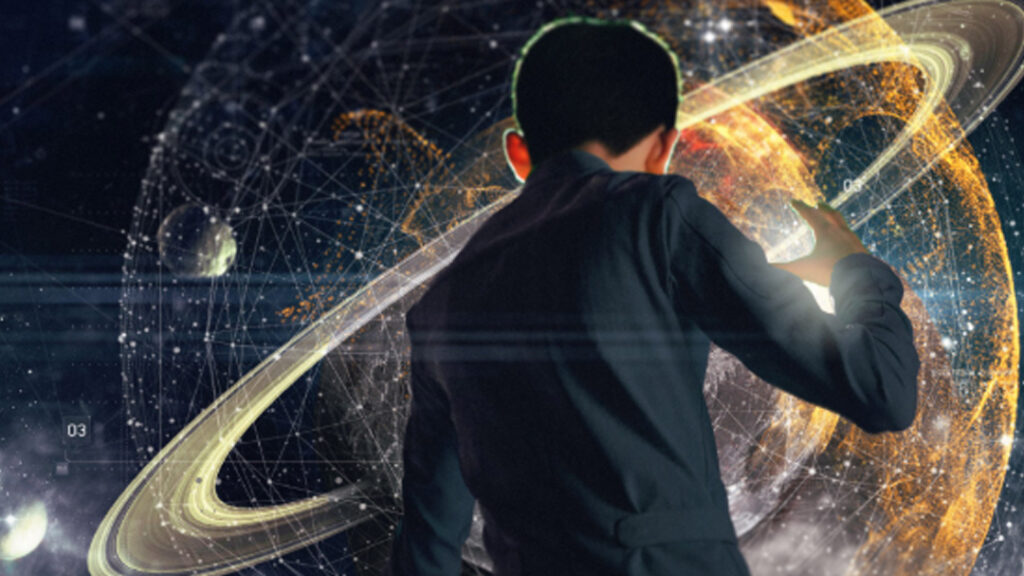
Even science fiction worlds follow this logic. The Force in Star Wars has limits; hyperspace travel requires fuel and plotting; psychic powers in Ender’s Game come with social and ethical consequences. Without these narrative costs, the worlds would feel arbitrary and unearned.
Symmetry and Instability: The Structure of Impossible Worlds
In speculative fiction worldbuilding, symmetry isn’t just a physics term—it’s a storytelling principle. In fundamental physics, symmetry keeps the universe stable. When symmetry is broken, stars ignite, galaxies form, and matter accretes mass. In storytelling, controlled symmetry and intentional instability make impossible worlds feel lived-in, believable, and emotionally resonant. Understanding this principle allows writers to craft worlds that feel coherent, immersive, and full of tension.
Why Symmetry Is Essential for Immersive Storytelling
A tightly structured world works like N. K. Jemisin’s seismic magic: meticulously constructed, internally consistent, and logical. Symmetry in a story’s world is about creating a framework of rules—laws of physics, magic systems, or social hierarchies—that govern how everything functions. This framework gives readers a sense of reliability, even in the most fantastical settings.
For instance, in Brandon Sanderson’s Mistborn series, Allomancy is governed by strict, predictable rules. Readers can anticipate outcomes without knowing everything in advance, allowing the story to surprise without appearing random. Without symmetry, even extraordinary settings such as sprawling fantasy cities or alien worlds risk appearing inconsistent.
In short, symmetry is the skeleton of your world. It doesn’t make the story dull—it makes the impossible feel possible.
Breaking Symmetry: Creating Tension and Drama
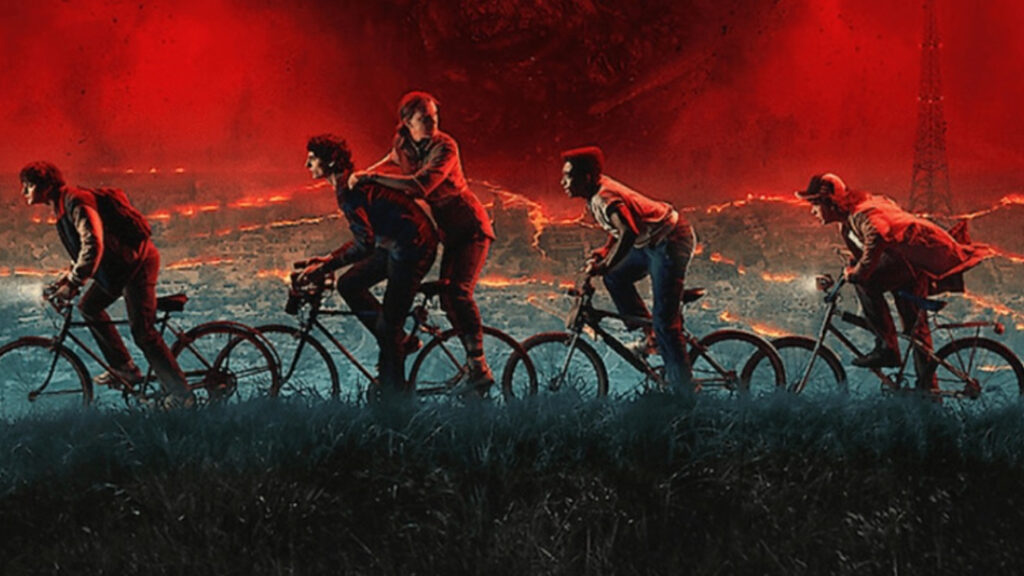
Once symmetry is established, breaking it creates narrative tension. In speculative fiction, this is where the magic—and the stakes—come alive. The Upside Down in Stranger Things is a perfect example. The world is mirrored mainly to our own, but one major symmetry—the boundary between dimensions—is fractured. This fracture allows monsters to escape, psychic bleed-through to occur, and ordinary lights to flicker ominously.
The key is intentionality. Fractures should feel meaningful, not random. A well-chosen disruption can transform an otherwise stable world into a site of danger, wonder, or intrigue. In fantasy and sci-fi, symmetry-breaking can manifest as a magical anomaly, technological failure, political upheaval, or environmental catastrophe. Each fracture introduces consequences that challenge characters and deepen the story.
Breaking symmetry isn’t just about creating drama; it’s about making your world feel alive, dynamic, and high-stakes.
The Golden Rule of Speculative Fiction Worldbuilding
Create order, then fracture it with purpose. This is the essential principle of worldbuilding in speculative fiction. Readers don’t need every detail to be realistic—they need rules they can trust. Once those rules are understood, breaking them generates stakes, tension, and wonder.

Think of the Harry Potter universe. The magical world has its own internal logic—rules about spells, magical creatures, and government oversight. When those rules are bent or broken, the consequences are dramatic: a forbidden curse causes chaos, or breaking a school rule triggers life-threatening adventures. These moments resonate because readers understand the baseline order.
This principle works across genres. In dystopian sci-fi, fracturing a social hierarchy can spark rebellion. In urban fantasy, violating magical laws can unleash unpredictable consequences. In every case, order provides context, and fracture provides narrative weight.
Controlled Instability: Making Fantasy Worlds Feel Alive
Controlled instability adds stakes, depth, and realism. A world that never changes or has no consequences feels sterile. Conversely, a world in which rules are broken arbitrarily feels chaotic. The balance comes from controlled instability: order guides readers, while fractures challenge them.
For example, in The Expanse, physics and realistic space travel rules provide a stable foundation, but conflicts, political intrigue, and unpredictable alien technology introduce instability. Readers know the “rules” but can still be surprised, which makes the universe immersive and tense.
In speculative fiction, controlled instability sustains reader engagement. Every broken rule should matter, every anomaly should carry weight. By combining symmetry with purposeful fractures, you create worlds that feel alive, unpredictable, and rich with possibility—worlds readers want to return to again and again.
Narrative Relativity: Emotional Continuity vs. Physical Accuracy
Einstein reshaped our understanding of time. Fiction reshapes it further.

In time-travel stories such as Arrival or Russian Dolls, the timeline contorts into impossible geometries, yet audiences remain grounded because the characters’ motivations remain constant. Emotional continuity becomes the speed limit of narrative relativity.
This is why Interstellar resonates even when the science wobbles. Cooper’s love for his daughter creates an emotional gravity well strong enough to pull the entire plot into coherence.
In speculative fiction, emotion becomes the universal constant. Break it, and no amount of accurate physics will save you.
The Ecosystem Effect: How One Impossible Thing Reshapes a World
The strongest worldbuilding treats impossible elements not as decorations, but as ecological forces. Introduce one anomaly into a system, and the entire environment must reconfigure around it. Magic, advanced technology, monsters, or miracles don’t exist in isolation. They behave like invasive species or new energy sources, reshaping everything they touch.
This is why some speculative worlds feel thin while others feel inevitable. The difference is consequence.
Why Believable Fantasy Worlds React to the Impossible
In real ecosystems, nothing exists alone. Add a new predator, a new resource, or a new climate pressure, and food chains, behaviors, and hierarchies change. Believable fantasy and science fiction worlds follow the same logic.
When a story introduces an impossible element, readers subconsciously expect ripple effects:
- Who benefits from it?
- Who controls it?
- Who fears it?
- Who builds laws, rituals, or weapons around it?
If the world doesn’t react, the illusion breaks. The impossible begins to feel cosmetic rather than structural.
Dune and the Power of a Single Transformative Resource
Frank Herbert’s Dune is a masterful example of this principle. The spice melange isn’t just a plot device; it reorganizes the entire universe. Economics bend around it. Religion sanctifies it. Politics weaponize it. Entire civilizations exist solely because this one impossible substance exists.
This is why Dune feels real. The spice behaves like oil, prophecy, and a drug rolled into one, and the universe responds accordingly. Nothing remains untouched. That systemic response is what makes the world believable.
Dragons, Power, and Political Gravity in Epic Fantasy
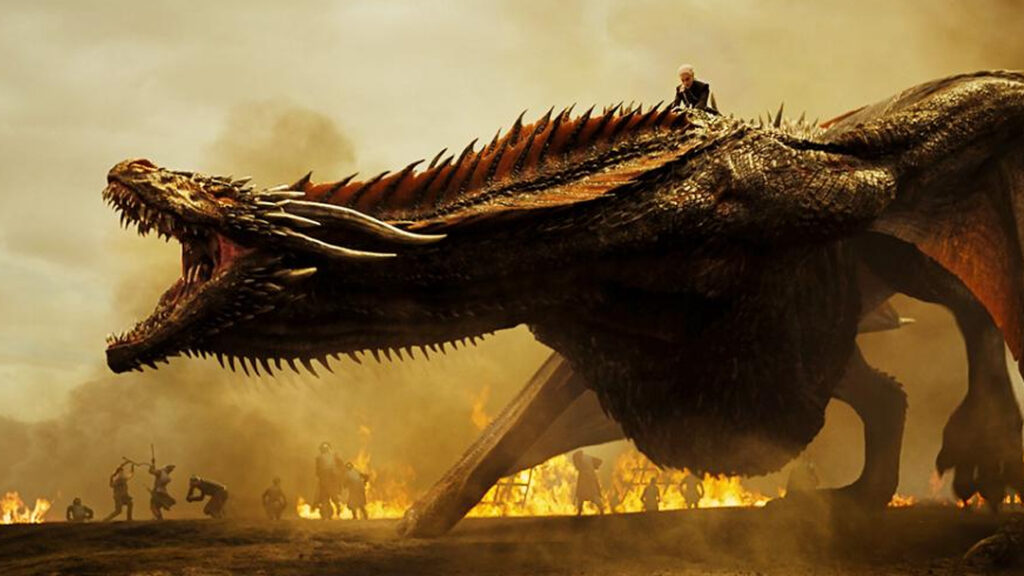
In A Song of Ice and Fire, dragons are not just large monsters with wings. Their existence reshapes military strategy, political ambition, and the balance of power. Castles become vulnerable. Armies become obsolete. Claims to the throne suddenly gain divine weight.
The key insight here is that power concentrates gravity. Once dragons return, every decision, alliance, and betrayal bends toward them. This is why readers accept the fantasy. The world treats dragons as destabilizing forces rather than as background spectacle.
Small Impossible Details with Outsized Consequences
Not every impossible element needs to be world-shattering. Sometimes the most minor anomalies create the most haunting effects.
Narnia’s lamppost quietly suggests a collision of worlds, technologies, and mythologies. It implies history, migration, and forgotten crossings. In Black Mirror, a malfunctioning AI or speculative device doesn’t just cause plot tension—it exposes ethical fault lines, social habits, and technological dependency.
These details are effective because they have cultural, ethical, or psychological implications. Even when the scale is small, the impact is real.
Why Science Fiction Worlds Feel Real to Readers
This ripple effect is the secret engine behind SEO-rich questions like:
- How to build a believable fantasy world
- Why science fiction worlds feel real
- What makes good worldbuilding
Readers searching for these phrases aren’t asking for realism. They’re asking for causality. They want to understand why some worlds feel solid enough to live in while others feel like stage sets.
The answer is simple and demanding: impossible things must change everything they touch.
The Plausibility Paradox: Consistency Beats Accuracy
Speculative fiction doesn’t need to obey real-world physics to feel authentic. Star Wars dogfights ignore thrust, mass, and vacuum entirely, yet they feel convincing because they borrow the emotional grammar of WWII aerial combat. Pilots bank, pursue, panic, and celebrate victories exactly the way audiences expect. The physics are wrong, but the experience is right.
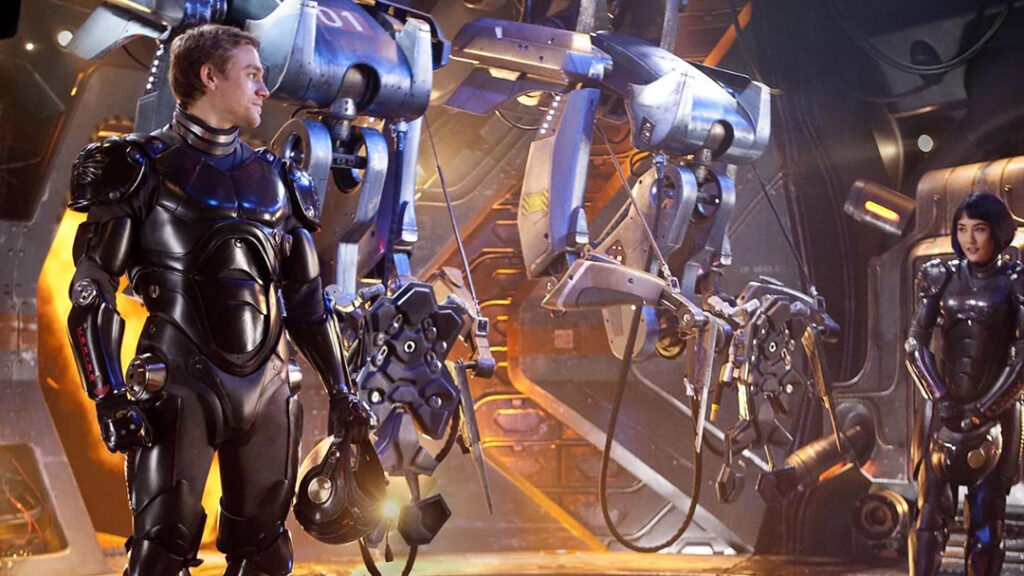
Likewise, Pacific Rim defies geology, structural engineering, and robotics, but it respects the physics of spectacle. Every punch lands with weight. Every kaiju moves like a natural disaster. The audience feels scale, momentum, and consequence, even if none of it could exist outside the screen.
Authenticity, in speculative fiction, is not about equations. It’s about coherence.
Emotional Physics: Why Borrowed Logic Works
Stories don’t operate on Newtonian laws. They operate on emotional expectation. When speculative fiction borrows familiar frameworks—war films, disaster movies, myths, or westerns—it gives audiences a language they already understand.
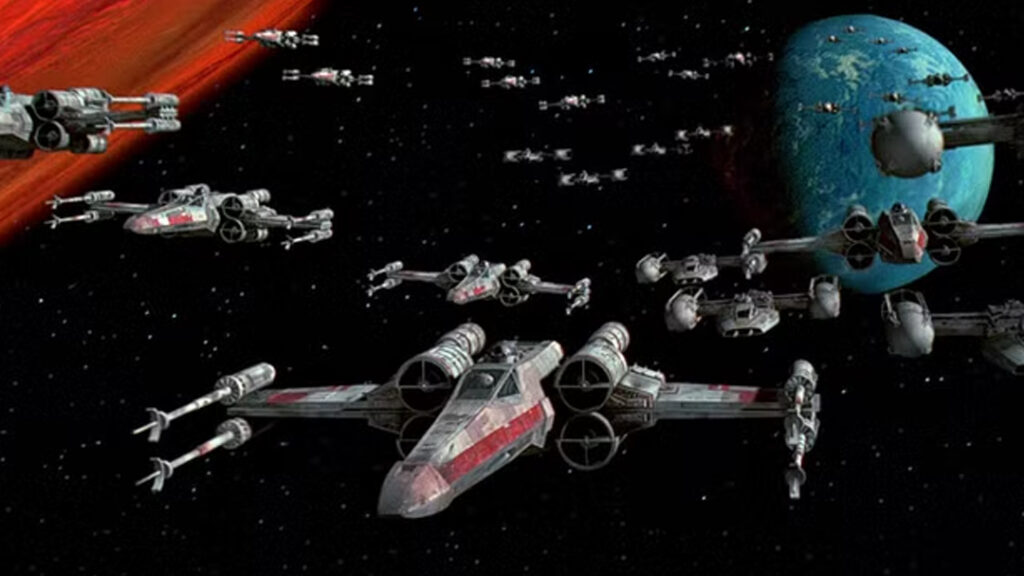
Star Wars works because space battles behave like dogfights, not orbital mechanics. Pacific Rim works because kaiju battles behave like earthquakes with fists. These stories substitute emotional realism for scientific realism, and the substitution feels seamless.
This is why audiences rarely complain about inaccurate physics unless the story itself promises realism. The moment a story establishes its emotional logic, viewers accept it as law.
Plausible Storytelling vs Scientific Accuracy
“Plausible storytelling” does not mean scientific accuracy. It means honoring the reality the story invented.
A story becomes implausible not when it breaks real physics, but when it breaks its own rules. If hyperspace works one way in chapter one and another way in chapter ten without consequence, readers feel the fracture. If giant robots feel heavy in one scene and weightless in the next, immersion collapses.
Plausibility lives inside consistency, not correctness.
Suspension of Disbelief Is a Contract, Not a Trick
Suspension of disbelief isn’t something a writer sneaks past the reader. It’s a contract. The story says, “This is how reality works here,” and the reader agrees, as long as the story keeps its promise.
Once that contract is broken, disbelief snaps back instantly. That’s why this concept remains an evergreen SEO phrase. Readers instinctively understand when a story violates its own terms, even if they can’t articulate why.
Suspension of disbelief survives impossible ideas. It fails only when logic becomes arbitrary.
Internal Consistency in Fiction: The Hidden Backbone
Internal consistency in fiction is the quiet architecture holding speculative worlds together. It governs magic systems, technology, tone, and consequence. When a story maintains internal consistency, readers feel safe exploring even the strangest ideas.
This is why wildly different genres—from space opera to urban fantasy—can all feel “real.” They don’t mirror our world. They cohere within themselves.
Consistency creates trust. Trust creates immersion.
Why Impossible Stories Reveal Real Truths
Impossible fiction works not because it escapes reality, but because it magnifies it. By stepping outside the limits of the possible, speculative stories expose the structures beneath human behavior. Ursula K. Le Guin’s Earthsea uses magic to examine power and responsibility. Ted Chiang’s stories dissect free will by turning philosophical questions into narrative mechanisms. Black Mirror interrogates modern ethics in worlds that feel only seconds ahead of our own.
These stories endure because they use impossibility as a lens, not a distraction.
Speculative Fiction as a Tool for Amplification
Speculative fiction stretches reality the way a microscope enlarges cells. By exaggerating one element—magic, technology, alternate history—it makes invisible tensions visible. Power, identity, agency, and fear become easier to examine when they are externalized into systems and rules.
In Earthsea, naming magic transforms language into authority. In Ted Chiang’s work, time loops and deterministic universes turn abstract debates into lived experiences. These stories don’t explain ideas. They embody them.
Turning Metaphor Into Machinery
One of the great strengths of speculative fiction is its ability to turn metaphor into machinery. Instead of saying “power corrupts,” a story constructs a world in which power literally reshapes reality. Instead of discussing ethical dilemmas abstractly, a narrative employs a device, algorithm, or spell that compels characters to confront the costs of their choices.
This is why speculative fiction feels intellectually active. Ideas are no longer symbolic decorations. They are operational systems that characters must survive.
Why Near-Future Worlds Feel Uncomfortably Real
Black Mirror works because its worlds are close enough to ours to feel inevitable. The technology isn’t fantastical; it’s adjacent. That proximity transforms abstract ethical concerns into personal dread. Viewers recognize themselves in these futures and realize the distance between now and then is uncomfortably small.
By shifting reality just a few degrees, speculative fiction makes cultural anxieties impossible to ignore.
Why Science Fiction and Fantasy Continue to Matter
This is why search queries like “why science fiction matters” and “what fantasy teaches us” remain evergreen. Readers and viewers intuitively understand that impossible stories reach truths realism often cannot. Realism is constrained by what already exists. Speculative fiction asks what could exist—and what that possibility reveals about us.
Fantasy and science fiction don’t avoid reality. They interrogate it from angles realism can’t reach.
The Enduring Power of the Impossible
Impossible stories give form to fear, hope, and moral uncertainty. They stretch reality until hidden pressures surface. They transform emotion into architecture and cultural questions into narrative experiments.
In doing so, they teach human truths that realism, bound to the visible world, often struggles to touch.
The Gravity of Meaning: Breaking Physics With Purpose
The enduring power of speculative fiction has nothing to do with lasers, magic, or cosmic anomalies. It has everything to do with meaning.
We’ll accept:
• a multiverse powered by bagels (Everything Everywhere All at Once)
• telepathic children (Ender’s Game)
• recursive dreams nested like puzzle boxes (Inception)
• a city that folds like origami (Doctor Strange)
But we won’t accept characters whose motivations evaporate. We won’t accept worlds that contradict themselves. We won’t accept impossible things that feel arbitrary.
When a story breaks physics, it must replace it with emotional gravity.
And that gravity is what makes fictional worlds—no matter how impossible—feel real.