Editor’s Note (2025 Refresh):
This article originally appeared on Fictionphile back when 5e was still young, and I myself was less experienced with writing this kind of content. But it quickly became one of our favorite pieces, so I’ve gone back to sharpen the language, clean up a few examples, and bring the mechanics in line with Dungeons and Dragons 5E (2014). The core idea is the same: your character class may say more about your subconscious than you might think. The tools and references are just fresher now. Please enjoy this old favorite with brand new content.
The longer I play Dungeons & Dragons, the more I see character classes quietly shaping patterns of behavior at the table, and when I noticed how well those patterns map onto the 12 Jungian archetypes, I tripped over a table to write down my thoughts.
Character classes in Dungeons & Dragons are heavily structured, and don’t allow much freedom outside of homebrew (which is why I ditched them entirely when I built my own homebrew system). But they do create something important from both a game design standpoint, and an actual play one—identity.
I’ve been playing D&D for over two decades, and in that time, I’ve played with dozens of people—some for one-shot sessions full of buffoonery, others for years-long campaigns that fluctuated between tears of sadness and tears of not being able to breathe from laughing.
These days, if I’m in an average group of five people, I can usually predict how each person will play just from the character class they chose.
“So what?” you might ask.
Well, it’s not really a problem that needs to be solved as long as all parties are having fun. But for those who wish to reach the heights of emergent storytelling, understanding how character class, player identity, and psychological archetypes fit together can allow them to break the chains that bind them and branch into new and interesting roles.
A big part of the problem is that most of us don’t consciously separate a class’s name from the cliché archetype it drags in from pop culture. Say “bard,” and everyone at the table suddenly has the same three mental images. Say “paladin,” and we’re right back to the same martyr-knight routine. We’re not doomed to play those clichés—but unless we notice them, we usually do.
A Quick Note on Jungian Archetypes
Before we staple a heavy psychoanalysis to your character sheet, let’s get a little context.
Carl Jung proposed that certain character patterns—heroes, mentors, tricksters, caretakers, rebels, and so on—show up again and again in myth, religion, and storytelling. He called these recurring patterns archetypes, and argued they come from a kind of shared symbolic toolkit in the human psyche. This is the junction of psychology and intertextuality.
You don’t have to buy into all of Jung’s metaphysics to see the usefulness of his ideas. Tabletop RPGs are basically collaborative myth-making with snacks.
When you choose a character class, you’re not just picking a statistical skeleton to hang numbers on—you’re choosing a role in a shared story. And it just so happens that the roles character classes create line up very neatly with Jung’s archetypes, which means they also come pre-loaded with expectations and clichés.
With all this in mind, the following is an analysis of what I consider to be the twelve “core” Dungeons & Dragons classes and the Jungian archetypes they most often fall into at the table.
Be warned, I’m going to make some large, sweeping generalizations here, and I recognize that. These are not the only ways I’ve seen these classes played—just the most common, cliché versions that show up again and again (and it’s not that serious).
Your job, if you want more interesting characters and stories, is not to avoid archetypes entirely, but to know which one you’re playing and then deliberately twist it. Here’s how.
The 12 Jungian Archetypes
Caregiver
Creator
Everyman
Explorer
Hero
Innocent
Jester
Lover
Magician
Rebel
Ruler
Sage
Browse by Character Class
Barbarian
Bard
Cleric
Druid
Fighter
Monk
Paladin
Ranger
Rogue
Sorcerer
Warlock
Wizard
The Everyman
back to archetypes | classes
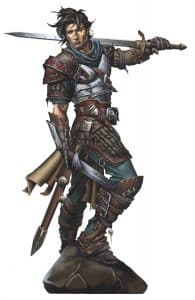
Character Class: Fighter
The everyman archetype is about belonging, blending, and being grounded. It’s about being so far removed from pretentiousness that it appeals to the widest audience possible.
A quick look at Dungeons and Dragons demographics will show you the most played character is… a human fighter.
Why? Because the human fighter is the most widely appealing. The character class is about becoming whatever it wants to be, and the human is about versatility, so the two go together like dwarves and ale.
Common Clichés
I’ve seen fighters played in a dozen different ways, but almost always they settle into the same narrative function: the anchor. The player who grounds the rest of the table.
Meanwhile, the wizard is off using Prestidigitation on a mushroom to make it smell like pie, and the rogue is once again trying to steal the cleric’s holy symbol while she sleeps. But the fighter? The fighter is sharpening their blade, checking their armor straps, and calculating how many hit points they can lose before they start sweating.
They know their job: deal damage, take damage. No metaphysics. No grand cosmic purpose. Just efficiency.
How to Mix it Up
There’s nothing wrong with wanting (or needing) a stabilizing force in the party—but the fighter doesn’t have to be the designated adult in the room. So, let’s flip the script and create The Agent of Chaos. When shit hits the fan, this is the character who breaks the fan and throws it across the tavern.
Got a fight to settle in your party? Punch both of them in the face. Bad guy giving a monologue? Hock spit on the ground and throw your sword at them. Tired of every turn becoming “I attack again”? Build for maximum disruption.
- Choose Battle Master as your subclass. Their maneuvers are literally a mechanical chaos kit.
- Select maneuvers like Trip Attack, Pushing Attack, Disarming Attack, Menacing Attack, and Goading Attack.
- Take feats like Tavern Brawler, Grappler, or Shield Master (bonus shove!) depending on flavor.
- Mix in the Shove action, improvised weaponry, and environmental attacks whenever possible.
Your new goal isn’t to steady the boat, it’s to rock it so hard the wizard considers Feather Fall a necessity.
The Caregiver
back to archetypes | classes
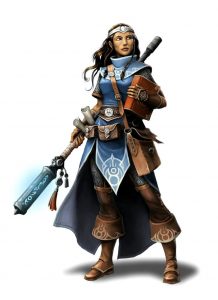
Character Class: Cleric
The Caregiver archetype is about caring for others, protecting them, and showing compassion. The cleric slides into this role so naturally that it’s almost unfair.
Since the earliest days of D&D, the cleric has been the party’s designated babysitter. Someone has to keep everyone’s organs on the inside, and that “someone” is usually the person who put a 17 into Wisdom on purpose. The cost, of course, is one of the Caregiver’s signature traits: martyrdom.
Some players genuinely love pumping hit points into nearly-dead teammates. Others accept the role because they know that if no one plays the healer, the party is going to die a horrible death as soon as they run out of healing potions to fuel their “creative ideas.” Either way, the psychology tracks: the cleric is expected to care more about everyone else’s fun than their own.
Common Clichés
Normally, when I see a cleric played, they have three priorities.
- Make sure the tank is topped off.
- Make sure whoever is closest to death isn’t anymore.
- Try not to die, because then everyone else definitely will.
Notice what’s missing from that list? “Do something fun.”
Clerics often sacrifice their entire turn on pure support duty. They might have a clever tactic, a spicy spell, or a cool domain feature they want to use—but the fighter is one hit from unconscious, so it’s back to, “I run over to the fighter and cast Cure Wounds. I end my turn.”
After doing that for three or four combats in a row, others may stop seeing you as a character and start treating you like a mobile first-aid kit. Let’s fix that, shall we?
How to Mix it Up
If you like playing a pure caretaker, that’s completely valid. Some people genuinely enjoy being the party’s guardian angel because it lets them pour all that “I can’t say no in real life” energy into hit points and Bless.
But if you’re tired of being the walking Wand of Cure Light Wounds, my idea for a cleric that breaks this mold is equal parts selfish asshole and invaluable member of society: The Healmonger.
- Choose a martial-leaning domain:
- War, Order, Forge, or Tempest, are all great fits.
- These give you things like heavy armor, martial weapons, and strong combat features.
- Grab spells that make you terrifying:
- Spirit Guardians, Spiritual Weapon, Bless, Shield of Faith, Divine Favor, Guiding Bolt.
- Keep a couple of efficient heals: Healing Word, Mass Healing Word, maybe Prayer of Healing for downtime.
- Take feats that reward frontline play:
- War Caster, Tough, Polearm Master, or Resilient (Con) to keep your concentration and stay in the fray.
Your core loop is simple: you crush skulls in your god’s name. Healing is a resource you ration out strategically, not as a reflex.
If one of your chaos-gremlin party members takes an axe to the face because of a bad decision, you don’t just auto-heal them. You make it a little in-character transaction consisting of a gold tribute, a “small favor,” or a stern “What did we learn about not listening?”
You’re still a Caregiver—you still keep people alive—but you’re a Caregiver with boundaries and teeth. You get to enjoy wielding the powers of the gods, swing a real weapon, and remain the reason the party isn’t dead…all without becoming the equivalent of a Kool-Aid Man full of Potion of Cure Light Wounds.
The Rebel
back to archetypes | classes
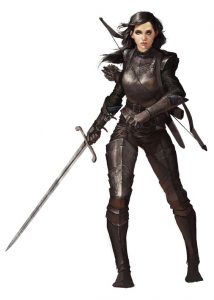
Character Class: Rogue
Who could have predicted this? I mean, it’s in the name. Every rogue might as well come with a patch sewn into their studded leather that reads: “Breaking rules and stealing your stuff since ye olde times.”
People don’t usually roll rogues because they want to sing kumbaya with the group. They choose this character class to indulge the fantasy of being the lone wolf, the outsider, the mysterious stranger, or…the rebel.
The Rebel (or Outlaw) archetype is all about disrupting power structures, breaking stagnant systems, and bringing freedom (or at least chaos) to those who are shackled by oppressive governments or restrictive rules. In theory, that’s a great fit for a fantasy world full of tyrants, corrupt nobles, and a lack of child labor laws.
In practice…well…
Common Clichés
Most rogues I see at the table lean hard into the disruptive side of the Rebel archetype—and almost always aim it inward, at their own party.
When there’s a rogue in the group, everyone else learns pretty quickly to sleep with one eye open. The moment the DM says, “You set up camp,” the rogue player’s goblin brain whispers, “Whose coin purse is closest?” And then, of course, comes the justification when the other players groan: “It’s what my chaotic neutral character would do.”
For those uninitiated with alignment because of 5E’s slow walk away from it (good, in my opinion), Chaotic Neutral was the easiest alignment to use as a hall pass for being an asshole. It roughly translates to “selfish and unattached.”
This usually means that when they’re not stealing from their teammates, many rogue players focus on breaking every rule and sneaking into every “Do Not Enter” area they can find.
While this can absolutely disrupt the local power structure by getting guards called, and resources diverted, it almost always always results in a different kind of disruption— one of the most overplayed scenarios in Dungeons & Dragons:
“Everyone Goes to Jail.”™
Fun once or twice. Less fun the tenth time the party has to break out of prison because Gary wanted to pickpocket a duke in broad daylight “for roleplay reasons.”
How to Mix it Up
So, forget that. Why play a rogue as a dissenting agent of discord when there’s so much of that in the world already. Why not play a “good” rogue?
Imagine, if you will, a gold-hearted scoundrel who uses their powers for the betterment of the team as a whole, and who contributes to society by employing their talents for people who need them most desperately?
You don’t have to do it for free, of course, that’s not good business. But what if you could be The Lever?
As the Lever, you’re still sneaky, still clever, still absolutely willing to break a law or three—but your focus is on creating openings, amplifying allies, and tilting the battlefield in your team’s favor.
Mechanically, you’re a support/control specialist wrapped in a rogue chassis:
- Consider the Mastermind archetype (bonus-action Help from range, tactical support), or Inquisitive/Scout if you want more information control and battlefield awareness.
- If you choose Mastermind, use the Help action constantly to hand out advantage like candy.
- Lean on Cunning Action to dart into position, shove, hide, or dash to set up perfect Sneak Attacks and flanking opportunities.
- Pick feats like Alert, Inspiring Leader, Martial Adept (snagging Commander’s Strike), or Magic Initiate (grabbing Find Familiar)
- If you choose Thief, your later Use Magic Device feature lets you patch missing roles by exploiting magic items your party couldn’t normally use.
With this build, your goal isn’t “look at what I can do.” It’s “look what we can do because I set it up.”
You’re still a Rebel, still sneaking into places you shouldn’t be, still getting paid, but now your rebellion is aimed at the actual power structures of the world, instead of the patience of your fellow players.
For even more roleplaying opportunities, choose a cause that your character believes in wholeheartedly. If that’s overthrowing an established government, build a rebellion. If that’s helping orphans, build a network of foster parents or trusted investors… or turn them into highly-trained assassins because of the lack of child labor laws. Your call!
The Sage
back to archetypes | classes
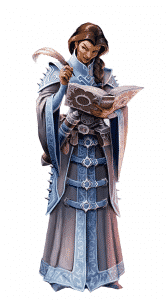
Character Class: Wizard
Ah, yes. The Sage. The fountain of patience, intelligence, and understanding.
To the Sage, knowledge is everything, and what better class to embody that than the wizard? After all, their whole shtick is learning, memorizing, and preparing spells. You can’t really do that without some knowledge of arcane secrets and a willingness to stay up way too late poring over books you probably shouldn’t be opening in the first place.
It’s a perfectly logical combination that’s existed since the dawn of modern fantasy:
wizard = walking library in a robe.
Common Clichés
With very few exceptions, when someone decides to play a wizard, this is the mental image: an old, bookish, socially awkward genius who lives in a tower and smells faintly of dust and spell components. For some reason, a lot of players actively fantasize about playing that.
It’s a tired trope, but mechanically effective. You get to blend optimal spellcasting with a roleplaying style that often boils down to holding up one finger as a party member approaches you because you’re reading a book.
Players often don’t realize that interesting people read books too, and sometimes they read better books. If a wizard came up to me and asked if I wanted to know about the rise and fall of Berkakania, and the implications of its sudden disappearance, I would say no.
But if a badass wizard came up to me and said that he’d just finished a fascinating read on how the stewards of Berkakania beheaded their leaders and stole all the magic, I’d be like, “yeah, tell me about that.” By the way, most of the search results on Google for “badass wizard” are still frail old men in robes.
When did we decide as a society that phenomenal cosmic power is to be wielded by those with the worst core strength?
How to Mix it Up
Let’s throw that image in the trash. It’s with the gelatinous cubes now. Rest in pieces.
Instead of another robe-wearing tower rat, let’s make a wizard who doesn’t care about how knowledge can inform, only about what it can do.
Imagine a wizard so impatient that instead of spending years in a dusty academy, they decided to shortcut the process by taking what other wizards already learned. They would probably be roguishly handsome fellow (or femme fetal lass) who looks like they belong on the cover of a Danielle Steele novel wreathed in a dramatic cloak.
This wizard uses magic not just to cast spells, but to steal them. Meet The Spelljacker. Books? Optional. Scrolls and stolen spellbooks? That’s the good stuff.
Mechanically, you can go a couple of directions:
- Stay pure wizard, and choose a subclass that leans into flexibility and trickery—Arcane Trickster–adjacent flavor without actually multiclassing.
- School of Illusion, Enchantment, or Lore-friendly Scribes all work well for a thief-of-magic concept.
- Or actually multiclass rogue/wizard (Arcane Trickster + Wizard) to lean into the “break into towers, steal their spells” fantasy.
Either way, think like a magical burglar:
- Spells like Disguise Self, Invisibility, Misty Step, Knock, Detect Magic, Arcane Eye become your bread and butter.
- You treat enemy spellcasters less like threats and more like loot boxes. Once defeated, interrogate their spellbooks, snag their scrolls, raid their laboratories.
- In-character, you offload the boring reading onto others:
- hire or befriend a bookworm NPC.
- convince another party member to skim the “important bits.”
- or claim your patron/god/arcane spirit just “uploads” the CliffMotes directly into your brain.
You still end up with a big repertoire of spells, but instead of the classic, patient Sage archetype, you’re playing a magically enhanced information thief. Less “kindly old mentor,” more “Your signature spell looks better in my book.”
Spelljackers don’t have time to read because they’re too busy stealing the next chapter.
The Creator
back to archetypes | classes
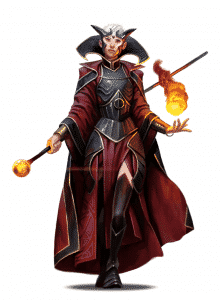
Character Class: Sorcerer
The motto of the Creator archetype is, “If you can imagine it, it can be done.”
That screams sorcerer energy to me, because unlike wizards, who treat magic like a toolbox, sorcerers are about artistic control. They don’t just know spells—they shape them, bending their limited list into as many creative uses as possible.
With so few spells known and tools like Metamagic at their disposal, sorcerers are constantly forced to ask, “How many different ways can I make this work?” And that’s the essence of The Creator: constraints become innovations.
Like the fighter, though, the sorcerer often tries a bit too hard to be everything at once. There are whole builds out there showing how you can run a successful party made only of sorcerers. But, like a friend of mine learned the hard way after being met with a Drow firing squad: “Just because you can do something doesn’t mean you should.”
Common Clichés
So what’s the cliché that haunts a character class this full of possibility?
Magic blood.
Every sorcerer I’ve played with or watched at the table seems to default to the same core identity: “My blood is special, that’s why I’m magic.” Draconic, wild, storm-touched, shadow-cursed—whatever the source, the personality usually falls into one of two buckets:
- “My blood is better than yours.”
- “I don’t need a personality because my spells do the talking.”
On top of that, many sorcerer builds end up as elemental embodiments. Fire, ice, lightning, acid…it doesn’t matter which element—someone is going to build their entire identity around it. Their power, their personality, their backstory, everything.
“Behold! I am the darkness. Born of it, molded by it, smooched with it!”
Of these two cliches, it may actually be the second one that’s more destructive, both literally and narratively. In my experience, this is largely attributed to one very iconic spell: Fireball. I would need ten people to count on their fingers and toes the number of sorcerers I’ve DMed for whose entire tactical philosophy was, “I cast fireball.”
How to Mix it Up
I really need players to stop trying to become the living embodiment of arson. It’s fun the first dozen times, then it devolves into meme territory. So, how do we fix a dependance on internal factors and give a sorcerer some truly creative material to work with? We put their magic on the outside.
This is where The Magic Mariner comes in. This sorcerer didn’t receive their powers from a dragon great-great-grandparent or drinking copious amounts of demon blood. instead, they got them from spending their life around the ocean.
In a world where magic is real, why wouldn’t someone spontaneously develop the ability to catch more fish, swim better, calm storms, or dry themselves off in seconds? Maybe there’s magic in their blood—but the Mariner doesn’t particularly care. They’re too busy keeping ships afloat, their nets full, and their crewmates alive.
To bring this to your table:
- Pick a sea-flavored origin like Storm Sorcery, or reflavor another origin with your DM’s blessing as “ocean-touched.”
- Use the Sailor or Pirate background, depending on your preferred level of spiciness.
- Build a spell list around function, not fire:
- Fog Cloud, Gust of Wind, Misty Step, Control Water, Water Breathing, Water Walk, Feather Fall, Create or Destroy Water.
- Use Metamagic to twist those spells into problem-solving tools: extend the duration of weather spells, twin lifesaving magic, subtle-cast your way through port inspections.
The Magic Mariner is still a Creator, but they’re creating safe passage, storms, opportunities, and solutions for the people around them instead of trying to fix every orc nail problem with a fireball hammer.
The best part about this concept? Once you’ve tried it with a sailor, you can do it with anything:
- a blacksmith sorcerer who shapes metal with magic instead of a forge.
- a street performer sorcerer who uses spells for their stagecraft.
- a chef sorcerer who uses magic for preservation, preparation, and the occasional emergency Heat Metal on a rude customer’s cutlery.
The point is: stop making your sorcerer about what’s in their blood, and start making them about the way of life they choose.
The Ruler
back to archetypes | classes
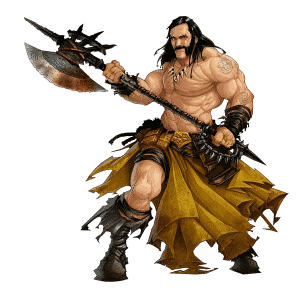
Character Class: Barbarian
The Ruler desires power—sometimes for good reasons, sometimes not-so-good ones. They’re controlling, authoritative, and often stubbornly uncooperative.
Rulers want to create safety and prosperity for “their people,” but the way they try to get there usually clashes with everyone else’s ideals. Even so, a true Ruler will stop at nothing to achieve their vision, even if they have to step on or over others to reach that goal.
That single-mindedness is magnetic, drawing the unfocused and the lost toward someone who always seems to know what to do. But this cult of personality is also usually what drags the Ruler down in the end: they can’t bend, so eventually they simply break.
At most tables, that energy belongs to one very specific character class—and you only get one guess which one. Well, not really a guess, I suppose, since there’s a heading up there that spoils it…
Common Clichés
The barbarian is the muscular powerhouse of all Frank Frazetta’s wet dreams. And about ninety percent of them are played as big, bruising idiots who barely know which end of the sword goes into the dragon.
Their single-mindedness often manifests as a single-stat monstrosity: Strength 20, everything else dumped. Charisma? Who needs to talk when you can growl your way through dialogue and have your party make excuses for you. Wisdom and Intelligence? Why bother when you can solve every problem with incessant, raging violence.
The result is a character whose priorities are: smash, survive smashing, then play on their phone until the next initiative roll. Other players quickly learn not to let the barbarian handle conversations, plans, negotiations, or anything that doesn’t involve a d12.
This is still Ruler energy—just in its worst form. The barbarian dictates the party’s pace by charging in, drags everyone else into their fights, and becomes the loud, bloody center of gravity whether anyone wanted that or not. It’s hard to ignore the proverbial elephant in the room.
How to Mix it Up
I know I said that barbarians dump everything except Strength, Dexterity, and Constitution, but that was mainly just for the bit. In reality, they often end up with a decent Wisdom score as well, but you’d never know it.
This is partly because as Cheeto-devouring nerds, we don’t see the benefit of using a barbarian’s highly-trained survival instincts. The other half of the equation is that most barbs don’t have enough intelligence to articulate what they sense.
This is like when Luk’tar couldn’t tell the party that he was smelling manticore urine in the forest just before the ambush—a piece of information that would be really helpful to the grumpily TPK’ed party who went home to roll new characters.
Therefore, I present the terrifying vision that is The Headhunter.
Not “head hunter” as in “guy who collects skulls” (though, you do you), but one who uses their head to interpret the warning signs their instincts are giving them, and share them with their group.
A Headhunter, conceptually, uses their Wisdom to find monster weaknesses, and uses their Intelligence to exploit them. After all, the reason mankind became the apex predator is because we were smart enough to create weapons and interpret the signs our prey left behind.
Mechanically and narratively, you can push the barbarian into something genuinely terrifying:
- Give them a real Wisdom score and actually use it:
- Perception, Insight, Survival, Animal Handling, tracking, reading people.
- Don’t dump Intelligence either. They don’t need to be a genius, but they should be smart enough to connect the dots.
- Choose paths that support “apex predator” vibes:
- Wild Heart (Wolf/Eagle), Ancestral Guardian, or Beast all work well.
- Take feats like Observant, Skill Expert (Survival or Perception), or Alert.
- In social scenes, let them call out lies, and sense threats. Even if they’re not taking the lead, they should be the scary silhouette glaring at the speaker, waiting for them to make a mistake.
With this kind of build, you can play a wall of meat who can both discern lies by subtle cues and plot the best ambush route through hostile terrain. Imagine being that person who says, “They’re going to flank us from the north ravine in about five minutes,” and has already set traps. The enemy will be terrified that instead of the hunter, they becomes the hunted.
This lets you keep your Ruler energy, but now you’re smart and wise enough to realize you don’t always have to be right. You can lead the pack, delegate, adapt, and pick your battles, because a true apex predator knows that there’s always another way to win.
The Jester
back to archetypes | classes
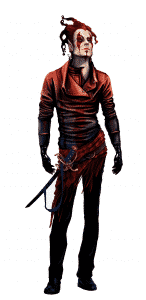
Character Class: Bard
The living embodiment of “YOLO,” the Jester archetype is all about living in the moment, chasing laughter, and making the world feel lighter—whether anyone asked for it or not.
Jesters hate boredom and stagnation. More than anything, they are terrified of being the boring one. They’re the type of people who make fart noises when the lights go out at summer camp just to hear the other kids giggle.
Thanks, Jeremy. Now I have to praise the lord with one less hour of sleep in the morning.
Common Clichés
The bard is a very versatile character class, but one thing all of its many faces have in common is this stereotype of being the happy-go-lucky master of fun and adventure.
Most bards I’ve seen at the table (with the exception of one who will serve as my uncharacteristic character for this section) fit this mold perfectly. They sing, they dance, they choose the weirdest instrument possible because they think it makes them unique.
No, Greg, you cannot give out Bardic Inspiration with a nose flute. It’s just not happening.
Mechanically, this often turns into:
- “I joke, I quip, I flirt with anything that moves.”
- “I cast Vicious Mockery and pull out my list of prepared insults.”
- “I strum a jaunty tune while everyone else is trying to have a serious moment.”
It’s very on-brand for The Jester… but it’s also the most obvious, overplayed version of that archetype.
How to Mix it Up
What I want to impart to people who play bards is that not all inspirational music needs to be happy.
In 5e, Bardic Inspiration doesn’t even have to be music, it just needs to be some kind of performance. That can be a whispered phrase, a cutting line, a ritual gesture, a bit of shadow puppetry, whatever.
So let’s lean into a darker expression of the Jester: The Dirgedamper
The Dirgedamper is unsettling. Their performances feel like curses instead of concerts. They primarily use charms and compulsions to get what they want:
- Need a guard to let you through? Charm Person.
- Need a party member to hand over their last potion? Suggestion.
- Need the lieutenant of the big bad to switch sides “just this once”? Hypnotic Pattern or Dominate if you’re feeling spicy.
This won’t endear you to anyone. But it will create fantastic roleplaying opportunities, especially when your allies start actively avoiding eye contact because they’re not sure if they trust you… or themselves.
To sell the concept:
- Consider College of Whispers (for creepy psychic edge), College of Spirits (less terrifying, more macabre), or College of Eloquence (for impossibly persuasive, unnervingly precise speech).
- Build your spell list around charm, fear, and control:
- Charm Person, Dissonant Whispers, Suggestion, Calm Emotions, Hypnotic Pattern, Fear, Dominate Person.
- Flavor your “performance” as:
- Hand gestures weaving through the air.
- A soft, morbid poem.
- A cold smile and a whispered promise of exactly how things will go wrong if someone doesn’t listen.
Nothing is more motivating than your bard calmly reciting how worms will crawl into your corpse if you fall in battle—and promising, in perfect rhyming couplets, to make sure it’s a closed casket.
You’re still a Jester, but instead of cracking jokes to keep the mood light, you’re dampening the dirge—holding your party’s feet over the edge of oblivion long enough that the fear of death seems…rather silly.
The Lover
back to archetypes | classes
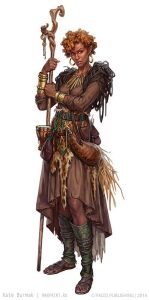
Character Class: Druid
The Lover archetype is chiefly concerned with cultivating intimacy. This doesn’t just mean romance. Any deep, consuming connection will do. Lovers surround themselves with what they adore because their identity is soon braided into the object of their affection.
That’s druids to a tee.
Druids live in constant proximity to what they love: the wilds, the spirits, the storms, the cycle of life and decay. Their powers literally come from their intimate bond with nature and the forces that animate it.
This doesn’t mean druids can’t be loving, generous companions to their adventuring party. But with intimacy comes vulnerability. Some can be judgmental, dismissive, or outright hostile to the druid’s spiritual connection with the natural world. The Lover gives all of themselves and forms attachments easily and losing those connections feels like a kind of living death.
A Lover’s greatest fear, after all, is being alone.
Common Clichés
The druid class is intrinsically tied to nature. Almost all their spells and abilities revolve around plants, animals, elements, or weather.
And bears.
So many bears.
That deep tie to nature makes it very hard to play a druid whose personality isn’t just “nature-obsessed forest hermit.” Some character classes are designed to sit inside a narrow fantasy box:
- The cleric must worship a god.
- The bard must perform.
- The paladin must be insufferably righteous about something.
With druids, the “tree-hugging nature priest” stereotype is so strong that many players don’t realize you can keep the mechanical connection to nature while twisting the emotional one into something more complex.
This means you don’t have to break the class to break the clichés associated with it.
How to Mix it Up
I present to you The Fire Marshall.
On the surface, this druid seems to hate nature, gleefully burning their surroundings to the ground. But underneath all the seemingly wanton destruction, their love hasn’t disappeared—it’s simply curdled into an obsession with nature’s harshest, purge-minded moods.
This druid’s relationship with nature can be complicated:
- Maybe they feel betrayed by its “cold indifference.”
- Maybe they see the “ugly” parts of nature like overgrowth and decay as flaws that should be burned away to restore its beauty.
- Maybe their love manifests as the cycle of destruction and renewal instead of focusing on abundance and healing.
They don’t reject nature—they may simply be obsessed with its most violent, purifying aspect. After all, who doesn’t love watching the world burn just a little bit?
To build your own Fire Marshall:
- Circle of Wildfire is your home base.
- Your Wildfire Spirit is both your arson buddy and emergency evac flare.
- Its teleportation and extra fire damage let you “controlled burn” any battlefield.
- Build a spell list around starting fires, shaping them, and surviving them:
- Low levels: Produce Flame, Create Bonfire, Burning Hands, Flaming Sphere.
- Mid levels: Heat Metal, Wall of Fire, Fire Shield.
- Support: Absorb Elements, Protection from Energy (fire), Fog Cloud reflavored as choking smoke.
- Consider feats like Elemental Adept (Fire) (ignore resistance that a lot of creatures have + increase fire damage), War Caster / Resilient (Con) to keep concentration while you stand in your own inferno.
- In combat, think like an actual fire marshal—just in reverse:
- Identify the exits. Seal them.
- Herd enemies into chokepoints with your Wildfire Spirit and walls of flame.
- Make a few fire-based one-liners as you force your enemies to make a choice between staying exactly where you want them and holding onto their hit points.
As for aesthetics, most druids choose not to wear metal armor, and The Fire Marshall is no exception. However, instead of bark-and-bones, they wear stone, obsidian, or ceramic plate. For mechanical purposes, this is just reflavored medium armor that won’t melt when everything catches fire. It’s heavy, heat-resistant, and it looks absolutely badass.
I know I gave sorcerers grief for being pyros, but a druid whose whole philosophy is “burn the parts of my love I can’t accept” is too good not to explore.
The Explorer
back to archetypes | classes
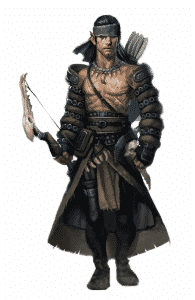
Character Class: Ranger
The explorer archetype is all about freedom, discovery, and authenticity. They hate being shallow, constrained, or being forced to conform.
So, it’s hardly a surprise that the ranger class is linked to this archetype more than all the others. After all, this is the character class that brought you Aragorn, Drizzt Do’Urden, and Katniss Everdeen.
Each of them broke the mold in some way—rebelling against their destiny, their culture, or their society. And, of course, by breaking the mold so memorably, they accidentally created a new one.
Unfortunately, many modern rangers tend to follow this new pattern a little too closely at the table.
Common Clichés
The ranger in most roleplaying games is the embodiment of many a nature lover’s fantasy—though they usually stop short of the full tree-fetishism of druids.
They get a few nature-based spells, maybe an animal companion, a choice of fighting styles, and a knack for navigating the woods better than anyone else. Most rangers I see at the table share the same philosophy: they shun society, live off the land, and need nothing and no one.
The result is often a self-sufficient loner who’s gruff, distant, and perpetually one roleplaying scene away from “going back to the woods where they belong.”
How to Mix it Up
To break the mold of breaking the mold, we need to remove the ranger from the wild entirely. I give you, The Civil Savant.
This ranger specializes in navigating the “untamed” parts of the city: back alleys, rooftop paths, forgotten tunnels, and social undergrowth. Their favorite terrain isn’t “forest” or “mountain”—it’s urban sprawl. Their core philosophy, likewise, shifts from “reject society” to reshape it from the inside.
Here are some mechanical options to bring your Civil Savant to life:
- Pick Favored Terrain: Urban (with DM approval) and Favored Enemy: Humanoid (bandits, nobles, criminals, whatever fits your story), or use Tasha’s optional rules and reflavor Deft Explorer / Favored Foe for city environments.
- Be sure your Wisdom and Charisma aren’t dumped, so you can improve your odds of networking with locals.
- Choose skills that make you a master of the streets:
- Perception, Insight, Investigation, Stealth, Persuasion, Deception.
- Consider the Gloom Stalker or Monster Slayer archetypes reflavored for city work:
- Gloom Stalker as sewer / back-alley predator.
- Monster Slayer as specialist in dangerous people, not just monsters.
- Backgrounds like Urban Bounty Hunter, Criminal/Spy, City Watch, or Guild Artisan all work with the “networked in the city” vibe.
This ranger makes contacts—lots of them. And not all of them are squeaky clean elected officials or guard captains.
The Civil Savant wants to curate society, not end it. This could mean quietly removing those who threaten the city’s ecosystem, like overzealous crime bosses or corrupt officials. It could also mean fighting for a cause, ensuring the right people get into positions where they would do the most good (even if good isn’t necessarily moral).
While you shouldn’t be the “main character” of the shared story, your role is campaign gold to a DM, so try to pull your party into your schemes, whatever they are:
- Run a gambling ring that doubles as an intelligence network.
- Organize an underground fighting championship that lets you vet local muscle.
- Found a secret society dedicated to keeping the city’s underbelly from swallowing it whole.
The city is your forest, the crowds are your canopy, and the people you meet along the way are the untamed animals you shepherd.
The Magician
back to archetypes | classes
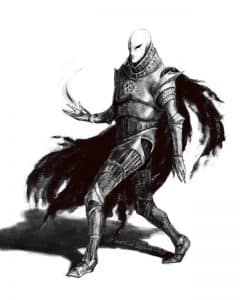
Character Class: Warlock
The Magician archetype is all about making transformation happen. Not so much turning lead into gold, but more of understanding how the world really works and using that knowledge (plus any leverage they can find) to turn dreams into reality.
Magicians see something they want and don’t stop until it’s in their hands. At their best, they’re brilliant problem-solvers who find win–win solutions. However, without proper structures and boundaries, they can become manipulative.
Which, in Dungeons & Dragons, happens a lot.
It’s like a twisted version of Murphy’s Law, “If there’s a way to exploit it, it will be exploited.”
Common Clichés
The warlock is another magical character class, but they gain their powers from something “greater than themselves,” this might be a deity, a demon, or some kind of weird cosmological anomaly. Usually, though, it’s a demon.
People who play warlocks often lean hard into “the leash.” They want a patron pulling their strings. Not necessarily in a kinky way (though, sometimes in a kinky way), but definitely in a “dark voices in my head tell me what to do” way.
At most tables, that translates to an edgelord with a tragic backstory constantly scheming with their patron to doublecross the party at an inopportune moment to gain ultimate power.
Because damnit, after all their hard work throwing Eldritch Blast around and brooding in the corner, they deserve to have all of their wishes come true in the most spectacular fashion. It’s the Magician archetype dialed up to 11 with a side dish of main-character syndrome.
So, to break the mold, we have to let go of the self and embrace the masses.
How to Mix it Up
There’s nothing wrong with giving your warlock dreams and ambitions. That’s expected of any player character. The problem comes when those ambitions always point inward. When you say, “my pact, my power, my destiny.” And there’s never any mention of the rest of your party.
But what if you played a warlock whose desire is to complete the wishes of others?
Enter: The Wishmaster. A warlock who uses pact magic to make everyone else’s dreams come true… for a price.
The Wishmaster’s patron is a genie—imprisoned in a vessel or otherwise bound. The genie can only be freed once a certain number or type of wishes have been fulfilled out in the world, and they need a mortal agent to do it. That’s you!
Your warlock’s dream is still big and weird and self-involved (freeing a genie from cosmic jail), but the method is all about helping other people get what they want. And maybe, just maybe, they’ll find more fulfillment in that than using all their dark spells on themselves. Maybe.
To bring this together mechanically:
- Choose Genie as your patron (Tasha’s).
- The vessel becomes an in-world focus for your “wish” motif.
- Your expanded spells list leans into control and utility already.
- Pick a pact boon that fits your flavor:
- Pact of the Talisman is highly recommended for this build because of it’s strong invocations. Plus, your genie’s prison could be a literal talisman that helps others succeed.
- Build your spell list around removing obstacles and enabling others:
- Invisibility, Fly, Misty Step, Suggestion, Comprehend Languages, Knock, Banishment, Dimension Door, Telekinesis, Sending.
- You still get Eldritch Blast, you’re just not pretending it’s your whole personality.
- Grab invocations that support the “make things possible” theme:
- Rebuke of the Talisman, Protection of the Talisman, and eventually Bond of the Talisman are all incredible options. This lets your ‘wish-granting amulet’ protect someone from hits, save them from failed saves, and eventually, teleport you to their side when they’re in trouble.
For maximum fun, make your party phrase their requests as wishes. Then, with great ceremony, answer each one with, “As you wish.” How you say it is half the fun—warm and earnest, or unsettling and just a little too formal.
One last thing: Don’t tell anyone except your DM your endgame.
Maybe freeing the genie will be good. Maybe it’ll be bad. Maybe even you aren’t sure. But by the time anyone realizes how much power you’ve quietly channeled into everyone else’s dreams, it’ll be far too late for them to pretend you were just “the blast cantrip guy” in the background.
You’re still embodying The Magician by transforming the world, it’s just that this time you’re just doing it through everyone else’s wish fulfillment instead of your own ego.
The Innocent
back to archetypes | classes
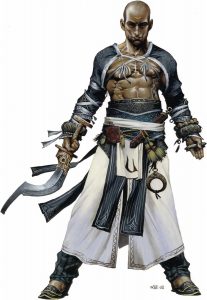
Character Class: Monk
The Innocent archetype is made up of people who don’t care how the system works—they just want to be happy, and they don’t see why that should be impossible.
They want to be themselves, pursue what brings them joy, and be rewarded for working toward their dreams. Their primary fuel is nostalgia—memories of happier days and simpler times buzz constantly in the back of their minds and keep them moving forward.
In the most traditional sense, an Innocent is a dreamer. Sometimes a utopian. But there’s another version: the boring saint. This is the mystic with a rigid vision of how the world should be, who quietly assumes anyone doing things differently is wrong.
Common Clichés
It’s this second brand of Innocent that the monk class usually falls into.
“Stick-up-the-ass syndrome” abounds in this character class that focuses on mysticism, tranquility, and sweet martial arts moves.
Because of the history of martial traditions and their pop culture spread in places like the US, a lot of monks at the table end up as shallow “mystic from the East” stereotypes. They’re quiet, vague, always meditating, and their contributions to dialogue are “fortune cookie wisdom” that sounds deep but doesn’t actually help.
They also tend to be very stoic, often keeping to themselves, even when big emotional things happen to other characters. That is, unless a particular moment serves as an opportunity to convert someone to their worldview. Then they appear from the shadows in broad daylight with a line like, “You cannot defeat that which has not won.”
Do you know what that means? I don’t and I sat here for like 5 minutes writing it. To the untrained ear, it sounds like wisdom, but it doesn’t actually contribute anything to the scene or the forward momentum of the narrative as a whole.
How to Mix it Up
To break this mold, we can’t just change the flavor of the monk, we have to break the tradition-first mindset completely.
The monk I’m suggesting doesn’t owe their power to a monastery at all. Any “mystical” abilities they develop are explained by worldly magic, extreme training, or sheer, desperate will.
I give you, The Heartbeater.
The Heartbeater suffers. That suffering doesn’t make them serene; it makes them driven. Maybe they have a sick family member they can’t afford to treat. Maybe their village is barely holding on and they’re sending money home. Maybe they’re trying to pay off a debt that isn’t even theirs but landed on someone they care about.
Adventuring and training their body into a weapon is not a spiritual retreat. It’s the cheapest, most direct way they can see to get what they need.
Their motivation is simple and brutally human: “If I don’t get stronger, the people I love will pay the price.”
Mechanically and narratively, you can lean into this kind of monk in a number of ways:
- Choose a grounded subclass:
- Way of the Open Hand for “pure martial discipline.”
- Way of Mercy if you want a “healer who hurts themselves.”
- Kensei if you see them as more of a weapon-centric fighter.
- Backgrounds and bonds can make or break the flavor:
- Take backgrounds like Folk Hero, Guild Artisan, Urchin, Soldier, or Entertainer (prizefighter). Basically, anyone with real roots.
- Give yourself Bonds that explicitly tie you to people. It could be a mentor, your family, a neighborhood, a cause, something.
- Pick features and feats that let you take a beating and keep fighting for your loved ones:
- Feats like Tough, Crusher, or Mobile are great for getting up-close and personal with your foes while keeping your ribs unbroken and your allies out of harm’s way.
- Lean into class features that encourage you to move in, bob and weave, and keep pushing (Patient Defense, Step of the Wind, Stunning Strike).
- Roleplay the cost:
- The more weaknesses and attachments this monk has, the more interesting they become. Every new scar, every exhausted long rest, every gold piece earned and spent is a tally mark on the wall of “I’m not done yet.”
- Their “wisdom” is specific, hard, and raw: “If we walk away from this, my brother doesn’t get his medicine. So no…We’re not walking away.”
Their fiery passion—not their serenity—becomes the catalyst for The Heartbeater’s rise to greatness. They’re still, technically, an Innocent because they yearn for a better, kinder world. However, instead of floating above the dirt dispensing ambiguity, they’re in the mud, bleeding for the chance to make one concrete thing better.
The Hero
back to archetypes | classes
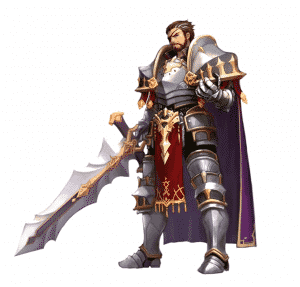
Character Class: Paladin
This is one of those Jungian archetypes meets Dungeons and Dragons character class combinations that almost feels a little too on-the-nose.
The Hero archetype is the one that constantly puts itself in danger to prove itself. They leap at any chance to face down a challenge, especially if someone even hints they might be scared, and they respond the to the weakness in others like a ten-year-old-child who just discovered their little brother is playing their XBox—emotionally, dramatically, and with a deep need to “fix” things.
Heroes relentlessly push themselves toward mastery, but they often leave everyone else in the dust while they’re doing it.
Sure, they can be nice people, and paladins are “supposed” to be lawful good. But the problem with the Hero is that their goodness often comes from a place of arrogance or self–righteousness rather than genuine humility.
Common Clichés
It’s not hard to imagine a paladin fitting perfectly into this mold. They’re unwavering devotees of their gods, sworn champions of capital-G Good, and designated smiters of Evil.
There isn’t a lot of room in the concept for “lukewarm” paladins. On paper, they’re all-in or nothing. At the table, that usually manifests in attitudes like:
- “I’m always right because my god says so.”
- “The law is the law, even when it’s terrible.”
- “I must help everyone, even if it wrecks the party.”
Sometimes this “lawful stupid” approach can create good drama. But more often than not, it just produces a character who does everything in their power to piss off the other players in the name of the law.
How to Mix it Up
To fix this, we’re not going to ditch “lawful good”—we’re going to redefine it properly via this brilliant creator GuildMasterDan’s “Alignment Done Right” series.
Dan defines the Lawful axis, as principled instead of “obeys all laws.” A Lawful character has a clear set of internal rules they understand and follow religiously—and not necessarily in a god-worshipping sense.
On the Good side, we’re talking about selflessness: a genuine concern for the well-being of others, even at personal cost.
So a true lawful good paladin is not “walking legal code who heals everyone for free.” They’re both principled and selfless.
Now, with that in mind, I give you our new archetype: The Inglorious Bastard.
The IGB (or Iggy, as we’ll call them) doesn’t care about upholding religious dogma or impressing the local clergy. They care about stopping people from getting hurt, full stop. They’ll do it in whatever way gets the job done, even if that means breaking some laws or some bones.
Iggy clings to two personal commandments:
- They will beat you fairly.
- They will not kill you.
Outside of these, everything is on the table.
They’ll go out of their way to save even a criminal if that criminal is about to die. They’ll absolutely deck a guard if that guard is about to hurt an innocent. They’ll risk their own life to prevent harm, but they won’t become an executioner to do it.
They’re Lawful because they never break their own code.
They’re Good because that code puts other people’s safety ahead of their own comfort.
And to sell the “Inglorious” part?
Make them terrifying.
Spikes, chains, scars, skull motifs—lean into the aesthetic of “this is clearly the bad guy” while playing someone who consistently makes the most selfless choices in the room. Let people in-world flinch when they walk in, then watch the cognitive dissonance when that same brute gently stabilizes a fallen enemy instead of finishing them off.
Mechanically, you can build this a few different ways:
- Oath choices that fit:
- Oath of Redemption if you want the strongest “I don’t kill” support. It’s heavy on non-lethal, control, and protection.
- Oath of the Crown if you see them as champion of their own code of justice, not the kingdom’s.
- Oath of Vengeance reflavored: you pursue oppressors relentlessly, but still refuse to kill once they’re beaten.
- Stats & skills:
- High Strength and Charisma: you need to both hit hard and radiate “do not test me.”
- Take Intimidation and Insight: read people, then scare them into standing down instead of killing them.
- Spells that reinforce the code:
- Protection, control, and subdual over raw murder:
- Compelled Duel, Shield of Faith, Sanctuary, Hold Person, Warding Bond, Banishment.
- Use your Divine Smite to drop enemies to 0 HP, then declare the hit non-lethal when possible.
- Protection, control, and subdual over raw murder:
- Feats to consider:
- Sentinel/Grappler – lock enemies down when they try to go after allies or civilians.
- Shield Master – body-block attacks, shove enemies away from softer targets.
- Tough – make yourself beefy enough to take a hit and shake it off.
- Heavily Armored / Heavy Armor Master – lean into the theme of “unstoppable juggernaut who stands between danger and everyone else.”
When you roleplay your Iggy, lean into their contradictions. For one, they look and sound like a villain. But as soon as a life is in danger, they’re the one stepping between the blade and the bystander, hauling enemies out of burning buildings, and refusing to land the killing blow.
They are absolutely still a Hero. They’re just the mud and blood-caked version that strolls through the nine hells with their principles intact.
Putting It All Together
Jungian archetypes and character classes aren’t shackles—they’re structures. When you mash the two together, you start to see why certain cliches show up again and again at the table… and why your “totally original” character feels suspiciously familiar three sessions in.
The point of this exercise isn’t to tell you you’re doing it wrong, because there’s plenty of that on the internet already. This piece is meant to give you a language to articulate the things you love about your favorite tabletop game, so you can understand them and wield them with intention.
You can absolutely lean into a classic archetype if that’s what sounds fun.
Play the bookish wizard, the forest cryptid druid, the nose-flute bard—but if you want to push a little, try one of these mix-ups…or ignore all of them and make your own monstrosity! Think critically, notice patterns, and decide whether you want to embrace it or break it. Then, talk to your DM and your table about what kind of story you’re all actually trying to tell.
Because at the end of the day, it doesn’t matter if you’re a “fighter” or “wizard” or “hero.”
We’re all just a bunch of weirdos sitting at a table, trying to make something memorable together.

Well you got the sage wrong (IMO)
ALTHOUGH saggio means wise, and druids use wisdom so I think it would HAVE to be a wisdom class but whatever. Still how did you miss the Magician being the wizard?
Might be my Latin privilege but Mago means wizard so in my language it’s hard to go astray in that direction.
This is very mind-opening, really an offbeat session of psychoanalysis, with clear clues as to why i tend to choose to play certain class(es) time and again:) Thanks for writing!
(The Druid part is a little confusing, though.)