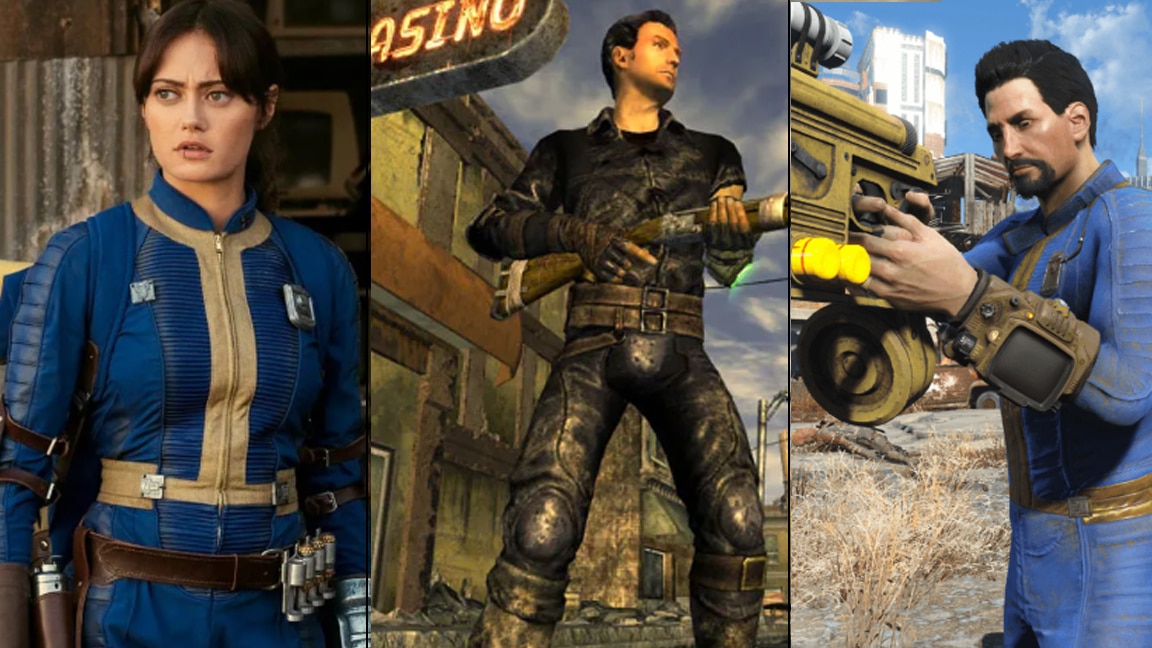
For nearly three decades, Fallout has occupied a strange and singular place in gaming culture. Few franchises are so comfortable living inside contradiction. Fallout’s TV show fixes game storytelling problems that have always been hiding in plain sight, in a world reduced to a dystopia of radioactive ash adorned with smiling mascots, upbeat jingles, and pastel optimism. It’s a setting obsessed with progress, science, and innovation, surrounded by the skeletal remains of civilizations that believed those ideas would save them.
That tension is the franchise’s signature—nuclear annihilation filtered through 1950s Americana. Capitalism pushed to cartoonish extremes, then allowed to rot. A future that never arrived, preserved like a museum exhibit after the bombs fell. Fallout’s retro-futuristic aesthetic, pitch-black satire, and morally compromised wastelands don’t just define its tone. They represent its identity. No other post-apocalyptic universe looks at the end of the world and responds with irony, consumer branding, and a jaunty thumbs-up.
It’s why Fallout has endured. The series doesn’t just ask what survives after the apocalypse. It asks which lies survive with it.
But for all its richness, Fallout has always wrestled with a fundamental storytelling limitation. Not a flaw in design, not a failure of imagination, but a boundary imposed by the medium itself—and one the television adaptation confronts head-on, showing how the television show fixes game storytelling in ways the games never fully could.
The very thing that makes Fallout exceptional as a game has always complicated its ability to tell a fully realized narrative.
Fallout is built around player agency. Choice is the engine that drives everything. Players decide who they are, who they help, which factions rise, and which ideals burn along the way. That freedom is sacred. It’s what turns Fallout from a story you consume into a world you inhabit.
Player Freedom Was Always a Double-Edged Sword
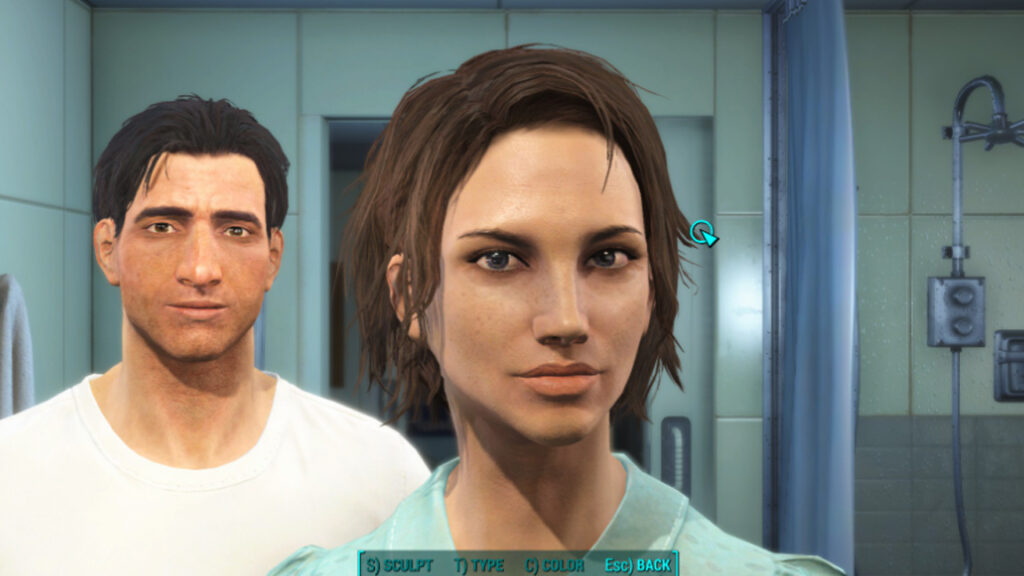
From the very beginning, Fallout has been defined by one guiding principle: player agency. Every major entry asks the same foundational questions and then steps back to let the player answer them. Who do you help when resources are scarce, and everyone is desperate? Who do you betray when ideals collide with survival? Which factions thrive, and which are quietly erased because of a single conversation or a poorly timed decision?
That freedom is powerful—but it’s also where the show fixes game storytelling, by revealing what happens when the wasteland is allowed to react without waiting on a player’s input. In Fallout, the wasteland doesn’t just exist. It reacts.
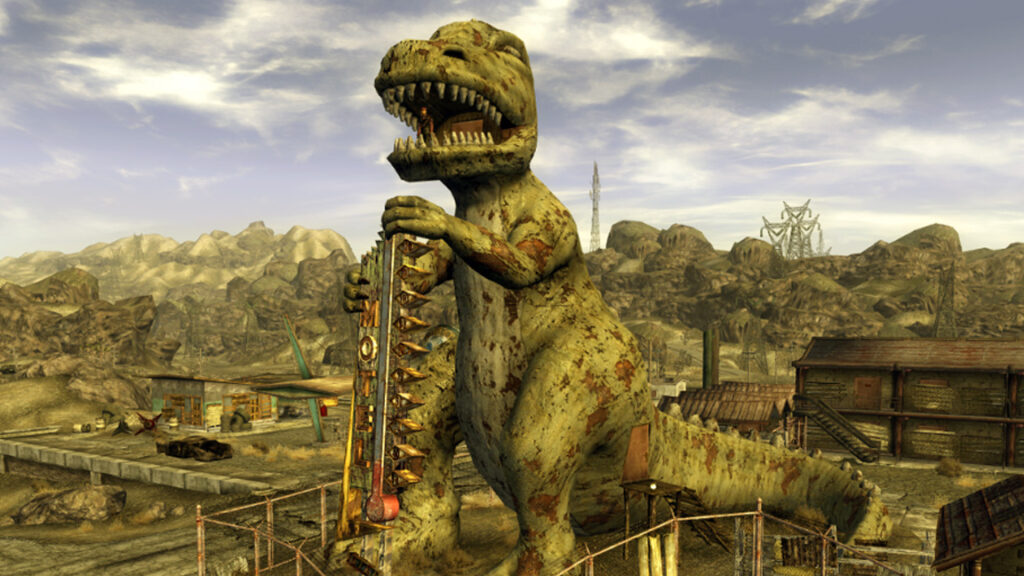
That freedom is not a side feature. It is the franchise’s beating heart. Fallout doesn’t funnel players toward a single “correct” outcome or moral alignment. It allows cruelty, compassion, apathy, and heroism to coexist, sometimes within the same playthrough. That openness is why fans are still debating endings decades later. It’s why choices linger in memory long after the mechanics fade. Fallout doesn’t lecture players about morality. It hands them the wheel and waits to see what they do with it.
But that same openness also reveals the limits of interactive narrative—limits the television adaptation confronts directly, and where the show fixes game storytelling by committing to consequence without player hesitation.
In that sense, Fallout doesn’t tell you who to be.
It asks you.
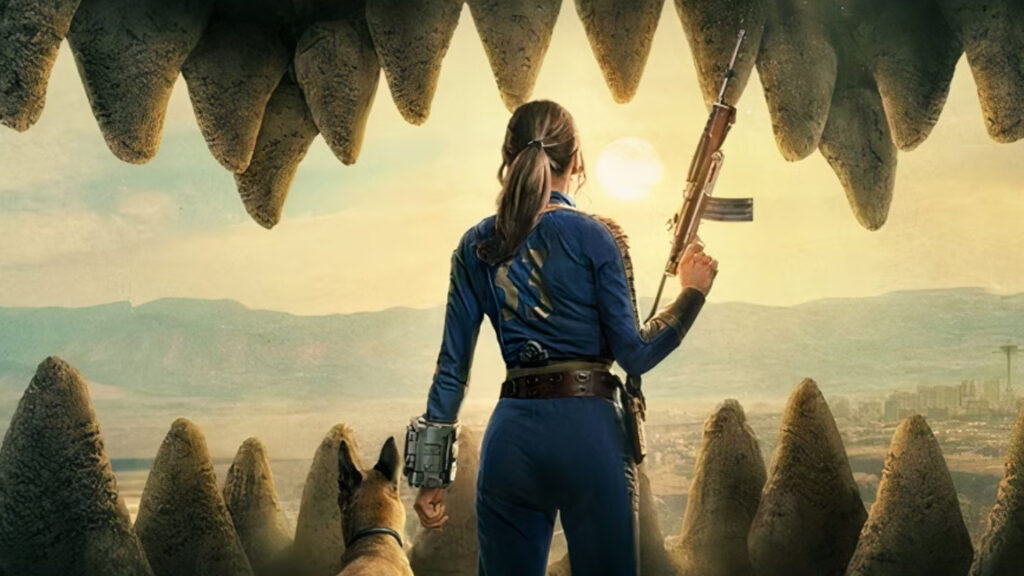
But that freedom has always come at a cost, one that’s easy to overlook because it’s so deeply woven into the design.
Because the player can be anyone, the protagonist often becomes no one.
Fallout’s main characters are intentionally incomplete. Vault Dwellers, Lone Wanderers, Couriers, Sole Survivors. These aren’t identities so much as narrative placeholders. Their backstories are minimal. Their personalities are undefined. Their emotional landscapes are left blank so players can fill them in with their own values, assumptions, and role-playing instincts.
It’s a design choice that works beautifully for immersion. Players don’t just control these characters. They inhabit them. But it also means the games can rarely afford to be emotionally specific about who the protagonist is or how they feel—precisely the gap where the show fixes game storytelling by allowing a defined character to experience consequence, grief, and motivation without needing to accommodate every possible player interpretation.
Trauma can be implied, but not enforced. Motivation can be suggested, but not cemented. Loss can exist, but only in ways that won’t contradict player interpretation.
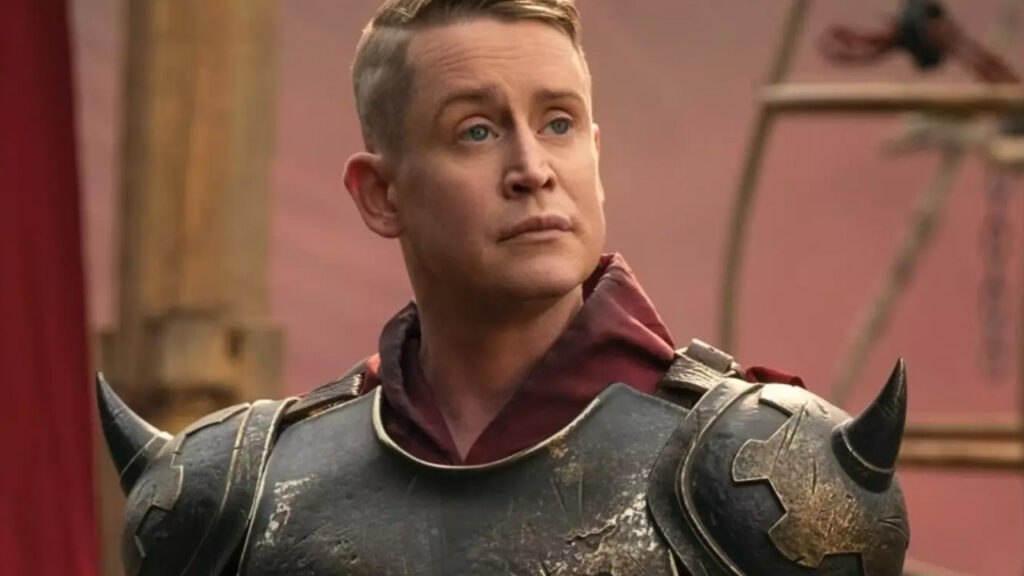
Fully committing to a defined emotional arc would narrow the range of possible player experiences. And Fallout has never been willing to do that.
As a result, much of the series’s most powerful storytelling happens adjacent to the player rather than within them. The emotional weight of Fallout lives in the margins—in terminals filled with desperate last messages, in holotapes recorded by people who never made it out, in settlements that tell quiet stories through environmental detail. Companion questlines reveal grief, loyalty, and moral compromise with far more clarity than the main plot ever can, underscoring why the show fixes game storytelling by moving those emotional throughlines to the center instead of the periphery.
Players often remember the people they met more vividly than the person they played.
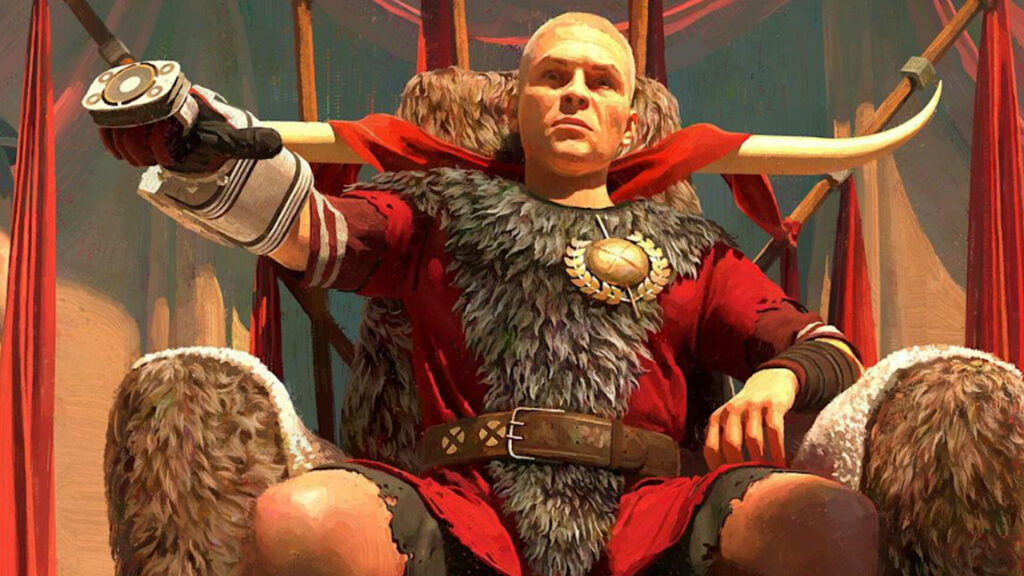
The protagonist, meanwhile, becomes a kind of emotional constant. Present for everything. Changed by nothing in a way the narrative is willing to define. They respond. They choose. They move forward. But they are rarely allowed to fracture, regress, or fundamentally transform in ways that aren’t immediately reversible.
They are witnesses to tragedy rather than its emotional center.
This isn’t a failure of storytelling. It’s a deliberate compromise. Fallout sacrifices narrative specificity to preserve player freedom. It trades a tightly controlled emotional arc for a world that feels reactive, personal, and endlessly replayable.
That trade-off is what makes Fallout feel like Fallout.
And it’s also why the franchise has always carried a quiet narrative tension at its core—one that the television adaptation exposes, and where the show fixes game storytelling by embracing the very constraints the games must avoid.
Not because they couldn’t tell deeper stories.
But because doing so would have meant asking players to give something up.
The TV Series Gains Power by Removing Choice
The Fallout television adaptation sidesteps one of the franchise’s longest-standing limitations by embracing something the games could never fully allow: a fixed point of view. This is where the show fixes game storytelling, not by replacing player choice, but by removing the safety nets we’ve grown used to.
There are no dialogue wheels here. No branching morality paths carefully designed to keep every option equally valid. No quick reloads to undo a bad call or test an alternate outcome. The series strips away the safety nets that video games are built on, and in doing so, fundamentally reshapes how Fallout’s world can be experienced.
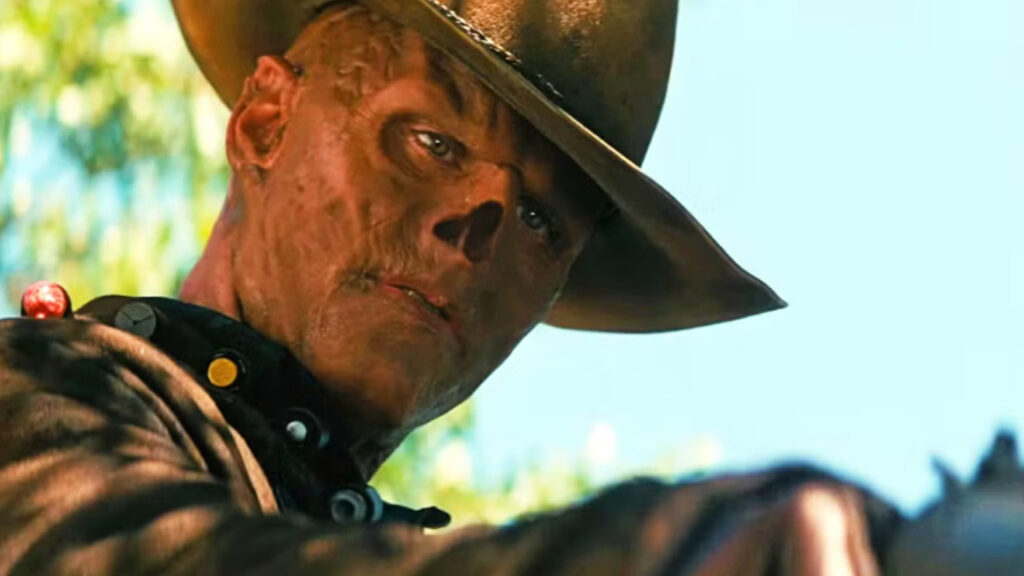
The characters at the center of the story are not avatars waiting to be defined by player input. They are fully realized people. They arrive with histories that weigh on them, blind spots they refuse to acknowledge, and contradictions they can’t neatly resolve. Their emotional arcs don’t pause for audience approval. They unfold with intention, sometimes uncomfortably so, forcing viewers to sit with decisions they might not have made themselves.
That single structural decision changes everything about how Fallout functions as a story—and it’s the clearest example of how the show fixes game storytelling by committing to consequence rather than accommodating choice.
By removing player agency, the series gains narrative authority. It can choose a direction and stay there. Characters make decisions that don’t branch into alternate timelines. They commit, and the fallout from those choices lingers. Trauma doesn’t conveniently fade after a questline ends. It compounds. Moral compromises don’t come with tidy justifications or reward screens. They leave marks, reshaping who these people are and how they interact with the world around them.
In the games, consequences are often modular. A town can be saved or destroyed, and the player moves on. Companions may react, but the protagonist remains largely intact, ready for the next mission. The show doesn’t have that luxury, and it doesn’t want it. Here, consequences are cumulative. Decisions echo across episodes. Regret has time to settle in. Guilt doesn’t disappear because the story needs to move forward.
This shift reframes the core question Fallout has always circled.
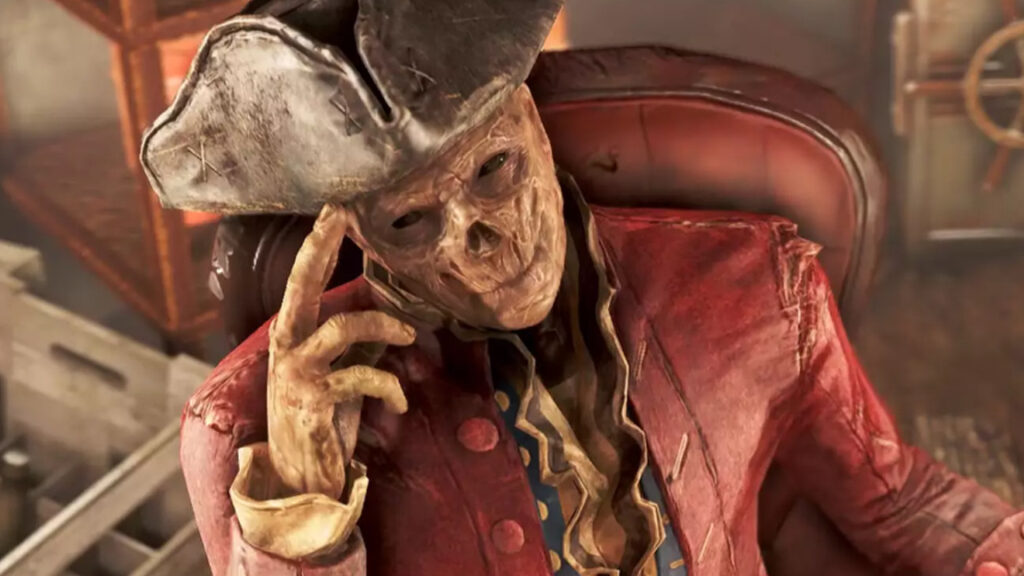
Instead of asking players what they would do in the wasteland, the series asks something far more unsettling: what does survival actually cost?
That question doesn’t have clean answers, and the show fixes game storytelling by refusing to offer them. Survival is no longer about optimizing builds or hoarding resources. It’s about erosion. What beliefs do you abandon? Which relationships do you sacrifice? How much of yourself are you willing to trade for one more day above ground?
Freed from gameplay mechanics, Fallout’s world is explored through relationships rather than systems. Bonds form under pressure, not because a quest demands it, but because isolation is unbearable. Trust becomes a resource more fragile than ammunition, something that can be spent once and rarely replenished. Loyalty isn’t guaranteed. It’s tested, strained, and sometimes broken beyond repair.
The wasteland stops being a playground of possibility and becomes harsher, more intimate—a place where survival isn’t measured in hit points or inventory slots, but in the parts of yourself you’re forced to lose along the way.
In making that shift, the Fallout TV series doesn’t abandon what made the franchise compelling. It distills it. By narrowing the focus, it deepens the impact, revealing a version of Fallout storytelling that was always implied but never fully realized.
For the first time, the wasteland isn’t a question posed to the audience.
It’s an answer.
Fallout’s Themes Finally Have Room to Breathe
Satire has always been one of Fallout’s sharpest tools, but in the games, that satire is necessarily fragmented. It arrives in flashes. A cheerful propaganda poster peeling off a ruined wall. A smiling mascot next to a mass grave. A terminal entry that starts quirky and ends in horror. Then the moment passes, and it’s back to scavenging, shooting, and surviving.
In the games, Vault-Tec’s satire is often a reward for the curious. You might spend an hour lockpicking your way into a back office in Fallout 3 just to find a terminal entry about a Vault designed to drive its inhabitants mad with white noise. It’s a “chilling revelation,” but it’s one you have to go looking for. If you’re just there for the loot and the XP, the satire remains part of the wallpaper—a “fragmented” experience that lands as isolated punchlines between firefights.
That fragmentation isn’t a creative failure. It’s structural. Games are built to keep players moving. Momentum matters. Long stretches of sustained thematic focus risk interrupting the loop of exploration and combat that defines the experience. Fallout’s satire, no matter how incisive, has to share space with mechanics—one of the clearest reasons the show fixes game storytelling by removing the need to constantly hand control back to the player.
Television doesn’t have that problem. By removing the need for a ‘gameplay loop,’ the show fixes game storytelling gaps that previously required players to fill in the blanks themselves
The Fallout series can maintain its tone throughout entire episodes, letting ideas simmer rather than flicker. It doesn’t need to punctuate its themes with jokes and immediately move on. Corporate exploitation, manufactured optimism, and the seductive lie of endless progress are no longer decorative details scattered through the environment. They are narrative engines, shaping characters’ beliefs, justifying their actions, and driving conflicts that can’t be solved by simply walking away.
In the games, satire often functions as commentary. In the show, it becomes a cause-and-effect relationship.
Nowhere is this more evident than in the treatment of Vault-Tec. In the games, Vault-Tec’s true nature is one of Fallout’s most chilling revelations, but it’s also entirely optional. You might uncover the truth by exploring a vault, reading logs, or piecing together environmental clues. Or you might never see it at all. The horror is there, waiting to be found, but it doesn’t demand your attention.
How the Show Ups the Stakes:
- No More Optional Horror: In Fallout 4, you can walk right past a Vault’s dark history if you don’t feel like reading logs. In the show, the characters “inhabit” that cruelty—it’s a “psychological weapon” that has already “broken families,” and rewired generations before the first episode even starts.
- Consequence Over Commentary: In the games, finding out that a Vault was an experiment is a “shocking twist” for the player. In the show, it’s a “cause-and-effect relationship” where corporate greed isn’t a historical footnote—it’s a “lineage” that actively harms the protagonists in the present.
- The “Thumbs Up” Isn’t Just a Mascot: While players might wear a Vault-Boy shirt because it looks cool, the show forces you to “confront the cost of laughing along” with the 1950s optimism. It turns the franchise’s “jaunty thumbs-up” into a symbol of a system that “succeeded” at the expense of everyone trapped inside.
The TV series removes that safety net.
Vault-Tec’s legacy isn’t buried in side content or hidden behind locked terminals. It’s integrated directly into the spine of the narrative. The consequences of its experiments aren’t abstract or historical. They’ve lived. Characters don’t discover Vault-Tec’s cruelty as a shocking twist. They inhabit it. They are shaped by systems designed to exploit hope, obedience, and trust long before the bombs ever fell.
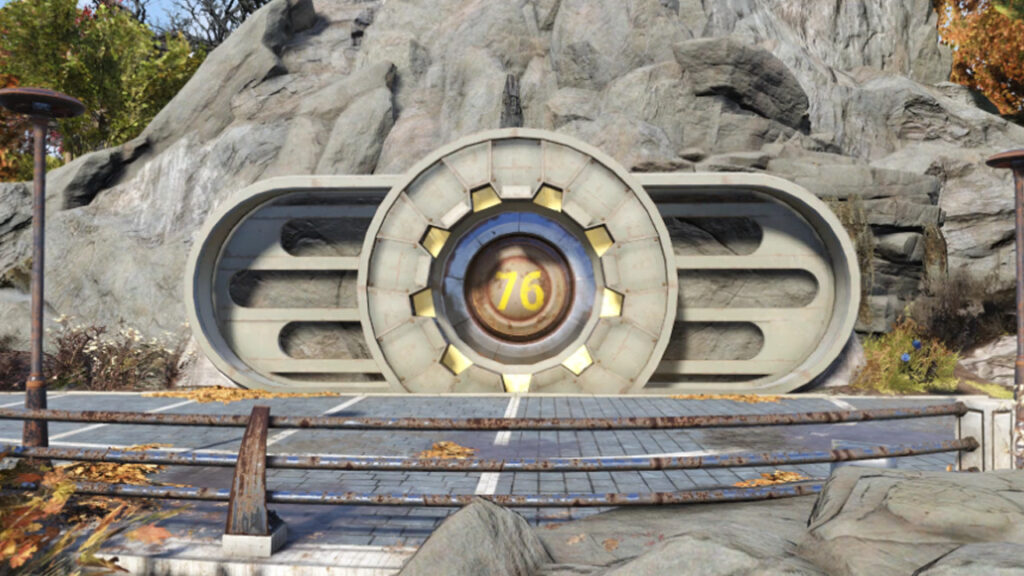
This shift transforms Fallout’s satire into something heavier and more uncomfortable. The cheerful branding and hollow optimism don’t just mock the past; they mock the present as well. They actively harm the present. Vault-Tec’s promise of safety becomes a mechanism of control. Its experiments don’t end with the vaults. They echo outward, influencing behavior, trauma, and power structures generations later.
The show makes it clear that these systems didn’t simply fail.
They succeeded.
They did exactly what they were designed to do, at the expense of the people trapped inside them.
By sustaining its tone, the series allows Fallout’s themes to accumulate weight. Corporate greed isn’t a punchline. It’s a lineage. Manufactured optimism isn’t ironic decoration. It’s a psychological weapon. The myth of progress isn’t just hollow. It’s actively destructive, convincing people to endure cruelty in the name of a better future that never arrives.
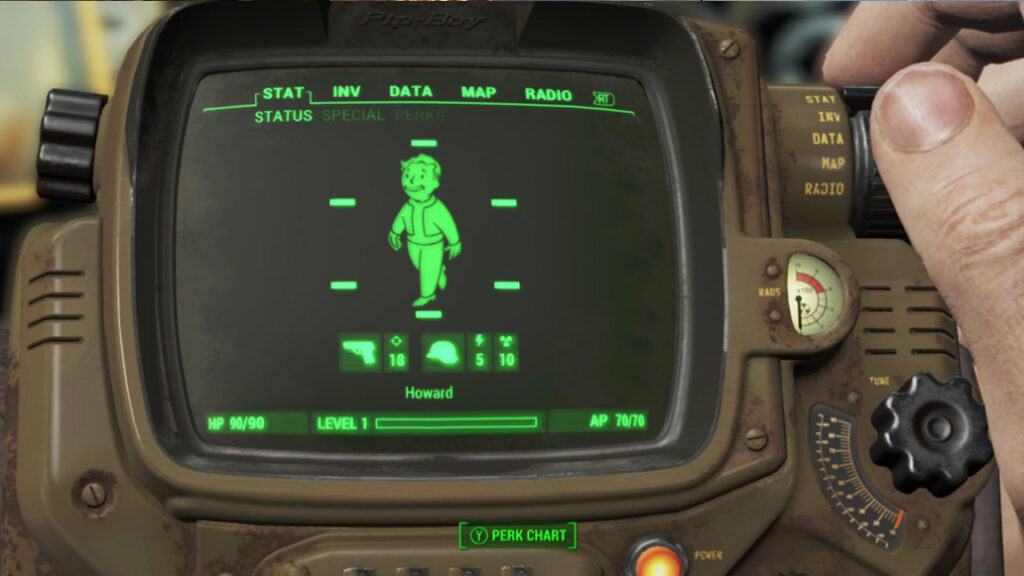
In this context, the apocalypse isn’t the beginning of Fallout’s tragedy. It’s the continuation of it.
The satire stops being observational and becomes personal. These systems shaped lives. They broke families. They rewired entire generations to accept suffering as necessary and exploitation as usual. And when the bombs fell, they didn’t wipe that damage away.
They locked it in.
For the first time, Fallout’s satire isn’t something you stumble upon between firefights. It’s the foundation the story is built on, forcing the audience to confront not just the joke, but the cost of laughing along with it for
When Side Quests Become the Story
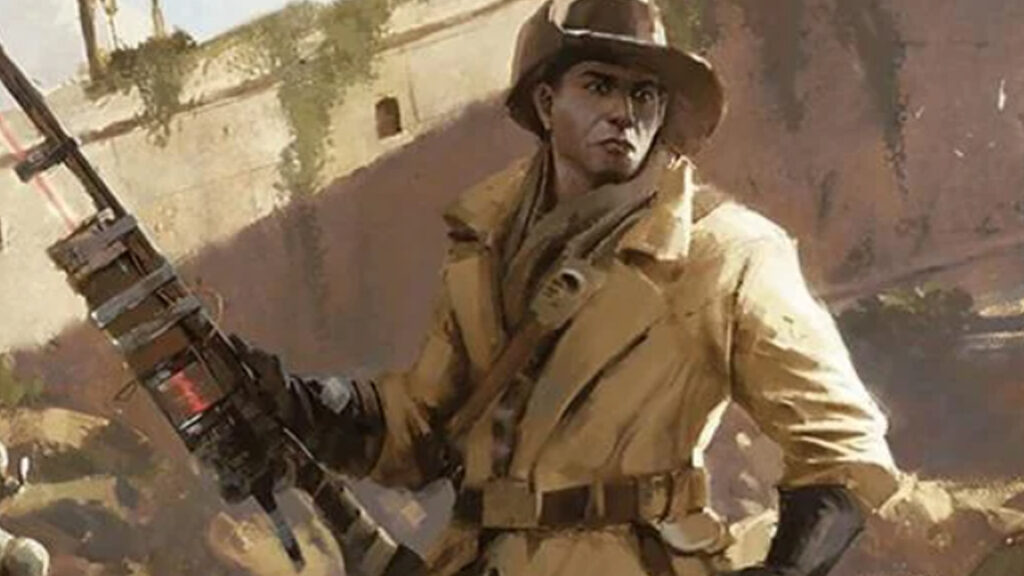
Ask Fallout fans what they remember most, and many won’t name the main plot. They’ll talk about a settlement they helped. A companion they lost—a morally impossible decision buried in an optional questline.
The games’ richest storytelling has often lived off the critical path.
The TV series understands this instinctively and flips the structure. What would have been a side quest becomes the backbone of the narrative. Individual stories are allowed to unfold slowly, intersect, and collide. Characters who would have been optional content are treated as essential.
This approach mirrors how players actually experience Fallout, but without the fragmentation of optional design. Nothing feels skippable. Nothing feels disposable.
The wasteland stops feeling like a game map and becomes a place.
Canon Stops Being a Problem and Becomes an Asset
One of the biggest anxieties surrounding the adaptation of Fallout wasn’t tone, visuals, or even casting. It was canon. Fallout’s relationship with continuity has always been deliberately loose, and for longtime fans, that flexibility is part of the appeal.
The games thrive on ambiguity—endings branch. Moral outcomes diverge. Entire regions can look radically different depending on a handful of late-game decisions. Two players can finish the same Fallout title and walk away with entirely different versions of history, each one equally valid. In Fallout, truth is subjective, shaped by choice, perspective, and the willingness to live with consequences or reload a save.
That ambiguity is a feature, not a bug.
But it’s also something television can’t replicate.
Fallout makes a decisive choice early on. It abandons ambiguity and commits to a single version of events. One timeline. One set of outcomes. One history that cannot be undone or revised, depending on audience preference.
Rather than weakening the story, that commitment gives it momentum.
By fixing the past, the series frees itself to focus on the present. Viewers aren’t parsing every plot development through the lens of “which ending is canon.” They’re watching the consequences of choices that have already solidified into history. The debate shifts from hypothetical alternatives to lived reality.
That shift changes the stakes entirely.
In the games, the future is always malleable. Even catastrophic decisions can feel provisional because the player knows they could have chosen differently. In the series, there is no such comfort. What happened happened. The damage is done. The world is the way it is because of decisions that can no longer be revisited.
That sense of inevitability gives the narrative gravity.
Choices stop being thought experiments and become scars. Political structures, personal trauma, and social decay aren’t branching paths. They’re the fallout of actions taken long ago, often by people who never had to live with the consequences themselves. The show treats history not as a puzzle to solve, but as a weight its characters must carry.
This approach also reframes Fallout’s central themes. Progress isn’t an abstract ideal. It’s a chain reaction. Power doesn’t disappear when its architects are gone. It lingers in systems, institutions, and inherited trauma. By locking the timeline in place, the series underscores how difficult it is to escape the past when it has calcified.
The audience isn’t asked to judge which outcome would have been better.
They’re asked to watch people survive the outcome that exists.
In doing so, the Fallout series transforms canon from a point of contention into a storytelling asset. The fixed past becomes a source of tension rather than limitation. The future, uncertain and fragile, is all that remains open.
The past can’t be rewritten.
What matters now is how people endure it.
The Games Didn’t Fail. They Were Limited.
Fallout doesn’t work because the games somehow failed at storytelling. That framing misunderstands both mediums. Fallout succeeds on television precisely because it is no longer bound by the rules that define Fallout as a game.
Video games and television are built to do fundamentally different things.
Games prioritize freedom. They are designed around agency, replayability, and personal expression. A great Fallout game doesn’t funnel players toward a single emotional truth. It hands them tools, systems, and moral levers, then lets them construct their own experience. Stories must remain flexible enough to survive wildly different choices, playstyles, and interpretations. Emotional beats are often modular, designed to fit whether a player is compassionate, cruel, or completely disengaged.
That flexibility is a strength. It’s what turns Fallout into a sandbox rather than a sermon. But it also places hard limits on narrative cohesion. A story can’t fully commit to a character arc if the character might behave differently for every player. It can’t lock in irreversible emotional consequences if players are meant to experiment, reload, and replay.
Television operates on the opposite philosophy.
A TV series prioritizes cohesion, momentum, and clarity of intent. It moves forward, not outward. Characters are not vessels for audience choice. They are subjects of the story. Their flaws, beliefs, and mistakes are fixed points the narrative can push against, deepen, and complicate over time. Consequences don’t branch. They accumulate.
The Fallout series benefits enormously from this shift.
Freed from the obligation to accommodate every possible moral path, the show can decide what matters and follow it through. It can track how a single decision reshapes a character across episodes, rather than resetting them for the subsequent encounter. It can let trauma linger, relationships erode, and ideals curdle without worrying about player satisfaction or balance.
What emerges isn’t a “better” version of Fallout, but a more focused one.
Themes that were once scattered across terminals and side quests now have room to breathe. Satire can unfold slowly rather than land as punchlines. Power structures can be examined not as optional lore, but as forces that actively shape lives. The world no longer exists to be explored at leisure. It exists to be survived, endured, and reckoned with.
This doesn’t diminish the games. If anything, it highlights what they do best.
Fallout the game invites players to ask who they want to be when the world ends. Fallout the series asks what happens when that question has already been answered, often severely, by people who came before.
They are complementary visions, not competing ones. The games offer possibilities. The show offers consequences.
And by operating under different rules, the Fallout TV series unlocks a version of the franchise’s storytelling that was always present in the margins, waiting for a medium that could finally commit to it without compromise.